Home
Key points of this research results
- Development of a method for assessing the condition of wood based on moisture-content changes induced by environmental temperature, humidity, and rainwater exposure.
- Investigation and accumulation of data on moisture-content changes in wood and wood-based materials in response to variations in environmental temperature and humidity.
- Accumulation of moisture-content and environmental exposure data for wood and wood-based materials used in buildings to track the history of environmental influences on structural members and support the assessment of their condition and structural health.
Outline
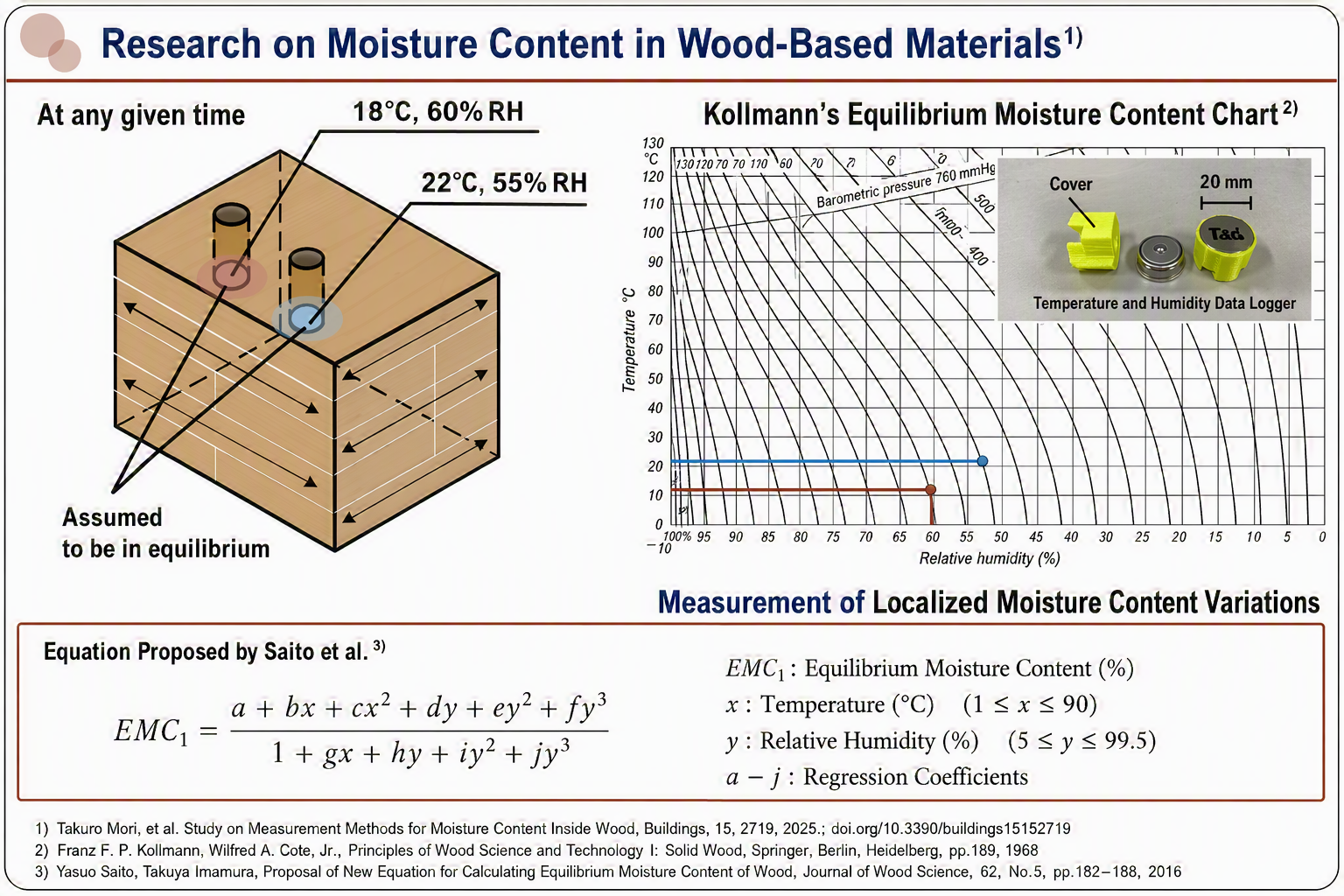
This study aims to develop a methodology for the long-term assessment of the health of wood and wood-based materials by focusing on changes in moisture content. Wood is affected by external environmental factors such as fluctuations in temperature and humidity and exposure to rainfall, which alter the amount of moisture contained within the material. These changes in moisture content, in turn, influence its mechanical properties, including strength and stiffness, as well as dimensional stability. Therefore, quantitative evaluation of moisture-content variations is essential for accurately assessing the condition of wood.
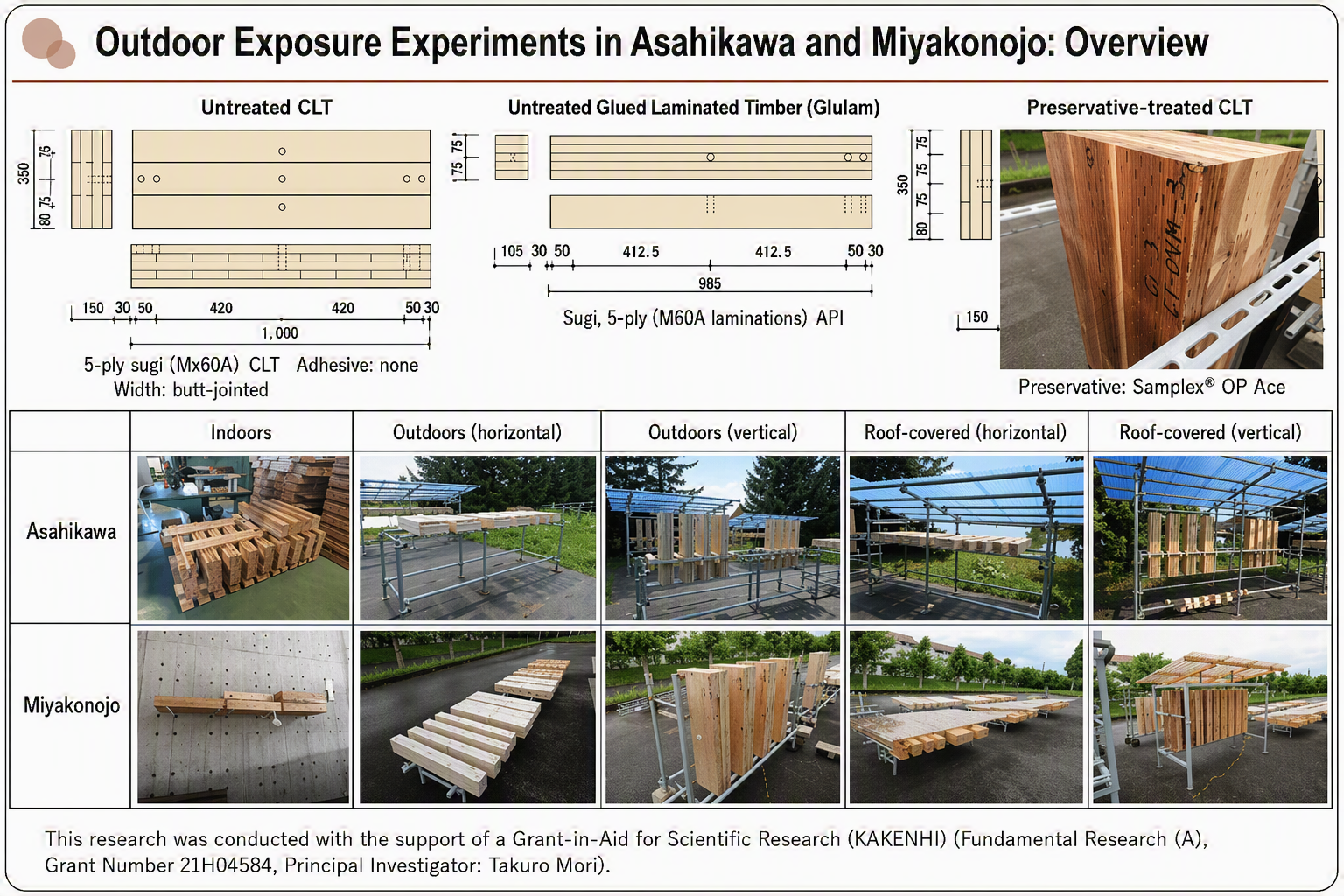
To achieve this objective, experimental investigations are being conducted to examine how solid wood, glued laminated timber (glulam), and cross-laminated timber (CLT) respond to changes in temperature and humidity, and how their moisture content varies under different environmental conditions. The resulting data are being accumulated to establish a comprehensive database of moisture-content behavior. In addition, similar data are being collected from wood, glulam, and CLT members used in actual buildings and organized as moisture-content history records, enabling the identification of environmental loads and deterioration factors experienced by these structural members over time.
By utilizing such historical data, it is expected that the internal moisture conditions of wood and wood-based materials, which are often difficult to evaluate through visual inspection alone, as well as the progression of deterioration in adhesive layers, can be estimated. This will contribute to more advanced methods for assessing the health of timber structural members and improving maintenance and management practices for wooden buildings. Furthermore, the outcomes of this research are expected to contribute to the extension of the service life of existing timber buildings, the effective utilization of wood resources, and the performance assessment of reclaimed and reused timber materials.