

 Home
HomeLet us explore “Humanity and Peace” together at the School of Letters, Hiroshima University, and pioneer a new approach to the humanities.
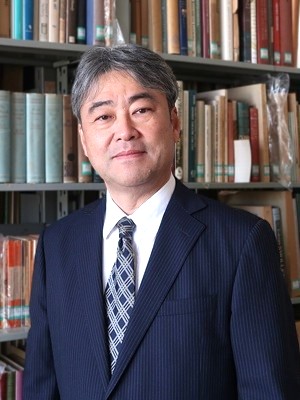
Osamu Imahayashi, Dean
Can you answer the question, “What does it mean to be human?”
Although we are human, it is far from easy to give a clear answer to the question, “What does it mean to be human?” At the School of Letters, six courses draw on their respective areas of expertise to engage with this fundamental question from sixteen distinct perspectives.
The courses in Philosophy and Thought, History, Japanese and Chinese Languages and Literatures, and British, American, and European Languages and Literatures, and Linguistics explore human intellectual and expressive activities through ideas, language, literature, and history. The course in Geography, Archaeology, and Cultural Heritage, meanwhile, examines the environments, archaeological remains, and artworks that surround us to illuminate the concrete dimensions of human existence.
Across all courses, students engage in close reading of texts alongside fieldwork, developing a multifaceted understanding of what it means to be human. The knowledge you have acquired in your studies so far will come together here in an integrated way. Studying in the School of Letters is an endeavour to bring these strands together and to reconsider the question “What does it mean to be human?” as your own. We sincerely hope that you will take up this challenge within one of our six courses.
Have you ever considered “what peace truly means?”
One of the origins of the School of Letters at Hiroshima University lies in the former Hiroshima University of Literature and Science. On 6 August 1945, it became the first faculty in the world to experience the devastation of an atomic bomb, marking an unprecedented chapter in its history. From the ruins and chaos that followed, it has continued to ask, from the standpoint of the humanities, “What is peace?”, steadily building its record of education and research.
In the first-year “Introductory Seminar for First-Year Students,” students attend testimonies from atomic bomb survivors, valuing the opportunity to reflect on one of the University’s guiding principles, “The Pursuit of Peace” as a personal responsibility. Across six courses, “peace” is explored from diverse and interdisciplinary perspectives, including philosophy, ethics, thought and culture, Buddhist studies, history, literature, linguistics, geography, archaeology, and cultural heritage.
At a School of Letters shaped by the experience of the atomic bombing, why not join us in thinking deeply about “what peace truly means?” We are very much looking forward to the day when we can engage in thoughtful reflection together with you.
