【Major Papers of the Laboratory】
・Brain-Derived Neurotrophic Factor Levels Are Associated with Depressive Symptoms in Patients with Asthma J Allergy Clin Immunol Pract. 2025 Nov 11.
・Plasminogen Activator Inhibitor-1 Mediates Tolerance to Anti-PD-1 Immunotherapy in Non-Small Cell Lung Cancer Mol Cancer Ther. 2025 Nov 6.
・Systemic miR-26a deficiency attenuates pulmonary fibrosis via PTEN upregulation and downstream TIMP-1 suppression Mol Ther Nucleic Acids. 2025 Nov 5;36(4):102765.
・The clinical potential of HMGB1 for the risk assessment of severe checkpoint inhibitor pneumonitis: A prospective multicenter study (CS-Lung004) Eur J Cancer. 2025 Aug 26:226:115606.
【Education】
(Respiratory Medicine)
A variety of diseases are contained in a group of respiratory diseases; cancer, allergic disease (i.e. Bronchial asthma), auto immune diseases, infections and lifestyle-related diseases (i.e. COPD or obstructive sleep apnea syndrome). We are cooperating with various hospitals and clinics to actualize the content-rich postgraduate education program and training doctors with broad experience and knowledge.
(Endocrinology and Diabetic Medicine)
Endocrine-metabolic disorders are caused by abnormality in hormones. Organs secreting hormones are located throughout the body and hormones affect an extensive variety of tissues. Endocrine-metabolic disorders include a wide range of conditions from common disorders that affect many people, such as diabetes and dyslipidemia, to rare diseases. Symptoms and signs appear throughout the body and therefore many clinical departments need to be involved. Acquiring adequate knowledge of this subject as a clinician is needed.
We aim to let students deepen understanding of a wide variety of endocrine-metabolic disorders and acquire basic knowledge necessary for a clinician.
【Research】
(Respiratory Medicine) ※Find more information for contents
1. Novel Inflammatory Pathogenesis of Bronchial Asthma We are redefining bronchial asthma as a "systemic inflammatory network dysfunction" to elucidate novel inflammatory profiles. Our research aims to apply these insights to the development of comprehensive and personalized medical approaches for asthma management.
2. Bronchial Asthma and Physical Activity Utilizing real-world data, we have clarified how diverse phenotypes of bronchial asthma influence the physical activity levels of patients, providing a better understanding of the disease's impact on daily life.
3. Plasminogen Activator Inhibitor-1 (PAI-1) in Respiratory Diseases Our research has revealed that PAI-1, a key inhibitor of the fibrinolytic system, plays a central role in the pathogenesis of a wide range of respiratory conditions, including interstitial lung disease, bronchial asthma, and lung cancer. We are currently leading investigator-initiated clinical trials of PAI-1 inhibitors, striving for their successful clinical and societal implementation.
4. Lung-Bone Marrow Axis in Pulmonary Fibrosis We have proposed a novel systemic mechanism termed the "Lung-Bone Marrow Axis" for pulmonary fibrosis. While traditionally viewed as a localized lung lesion, we have demonstrated that pathological crosstalk between the lungs and bone marrow significantly drives the progression of the disease.
5. AI-Driven Auscultation with Electronic Stethoscopes We are redefining the traditional art of auscultation-long dependent on a physician’s subjective experience-through AI-based objective quantification. Our goal is to establish non-invasive, real-time monitoring tools that are simpler than pulmonary function tests and eliminate the radiation exposure associated with CT scans.
6. HMGB1 and Lung Injury We have investigated the role of High Mobility Group Box-1 (HMGB1), a damage-associated molecular pattern (DAMP), in interstitial pneumonia and lung injuries associated with chemotherapy and immunotherapy for lung cancer. By integrating HMGB1 measurement into clinical practice, we aim to prevent fatal lung injury and ensure the safe delivery of advanced treatments.
7. Cohort Studies on Poison Gas Victims We continue to conduct a long-term cohort study involving former workers exposed to poison gas at the Imperial Japanese Army’s plant on Okunoshima Island. This historic research, maintained since the tenure of our first professor, Dr. Wada, continues to provide critical reports on the long-term health outcomes of these individuals.
(Endocrinology and Diabetic Medicine) ※Find more information for contents
1. Medical Survey of Japanese-Americans: "The Hawaii-Los Angeles-Hiroshima Study"
Since 1970, we have been conducting an epidemiological study titled "The Hawaii-Los Angeles-Hiroshima Study," which involves two populations of Japanese people without any differences in genetic predisposition but who live under different environmental factors: the group of Japanese-Americans who have acquired an American lifestyle and the group of native Japanese living in Hiroshima following the Japanese lifestyle. By comparing the medical survey data between these two groups, we have previously reported on the influence of westernization of lifestyle on the features of illness among Japanese people.
2. Adrenal insufficiency
We are conducting research related to the synthesis and secretion of ACTH and cortisol, hormones necessary for survival.
3. Brown fat and systemic metabolism
We are investigating the developmental mechanisms of brown adipocytes using in vitro and in vivo models. Additionally, we are clinically studying the metabolic function of human brown adipose tissue, particularly in patients with pheochromocytoma or hyperthyroidism. Our goal is to apply the knowledge gained from these studies to develop novel treatments for metabolic diseases such as obesity and diabetes.
4. A telemedicine system for diabetes utilizing IoT and ICT:
A novel network system utilizing IoT and ICT has been developed to provide high-quality diabetes care to patients living in areas without access to diabetes specialists. Our goal is to provide high-quality diabetes treatment throughout Hiroshima prefecture.
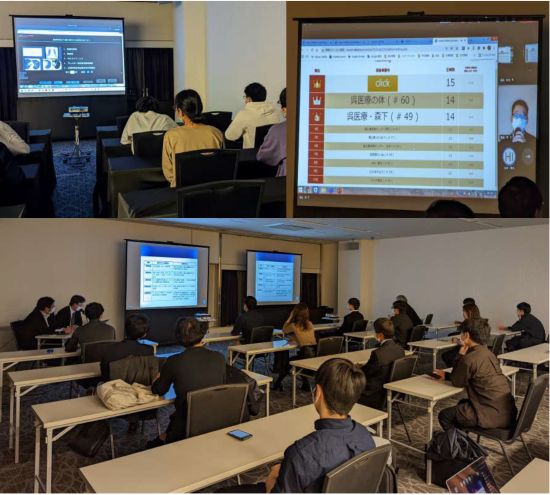
【Photo explanation】Clinical and radiological conferences for young doctors held twice or more a year.
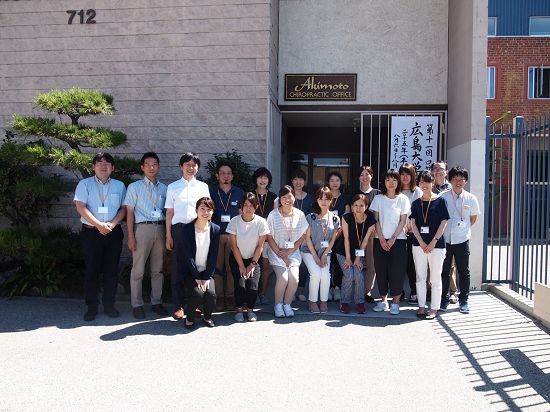
【Photo explanation】Medical stuffs of the “Medical Survey of Japanese-Americans in Hawaii, Los Angeles and Hiroshima” in front of the Hiroshima Kenjinkaikan, at Los Angeles.

 Home
Home