
 Home
Homee-mail: capr@hiroshima-u.ac.jp (Replace @ with a half-width charactor)
In recent years, university education has increasingly emphasised the development of so-called “generic skills”, such as the ability to collaborate with others and to solve problems, in addition to specialised knowledge. However, when discussing graduate attributes, basic competencies for employees, or employability skills, debates often focus on the abilities universities are expected to cultivate or the qualities sought by employers. The debates tend to lack perspectives grounded in students’ own experiences. The National Student Survey, conducted by the Ministry of Education, Culture, Sports, Science and Technology, is a valuable survey of students’ learning experiences at Japanese universities. One of the aims is to capture students’ subjective evaluations of the abilities they have developed through university studies. Our Centre has previously drawn on findings from the National Student Survey in out educational research reports to understand the current state of educational activities at Hiroshima University.
In this report, we use selected results from three rounds of the survey (conducted in 2019, 2021, and 2022) to describe how students at universities nationwide, at national universities, and at Hiroshima University subjectively evaluated the abilities they acquired through university studies, and to offer suggestions for educational practice at our institution.
Key results
In all three survey rounds, students were asked: “To what extent do you think you have acquired the following knowledge and abilities through university education?” (In the 2019 survey, the question was phrased as: “To what extent do you think university education has been useful in helping you acquire the following knowledge and abilities?”). As shown in Figure 1, the items include various aspects of generic skills that are not limited to learning in specific disciplinary fields.
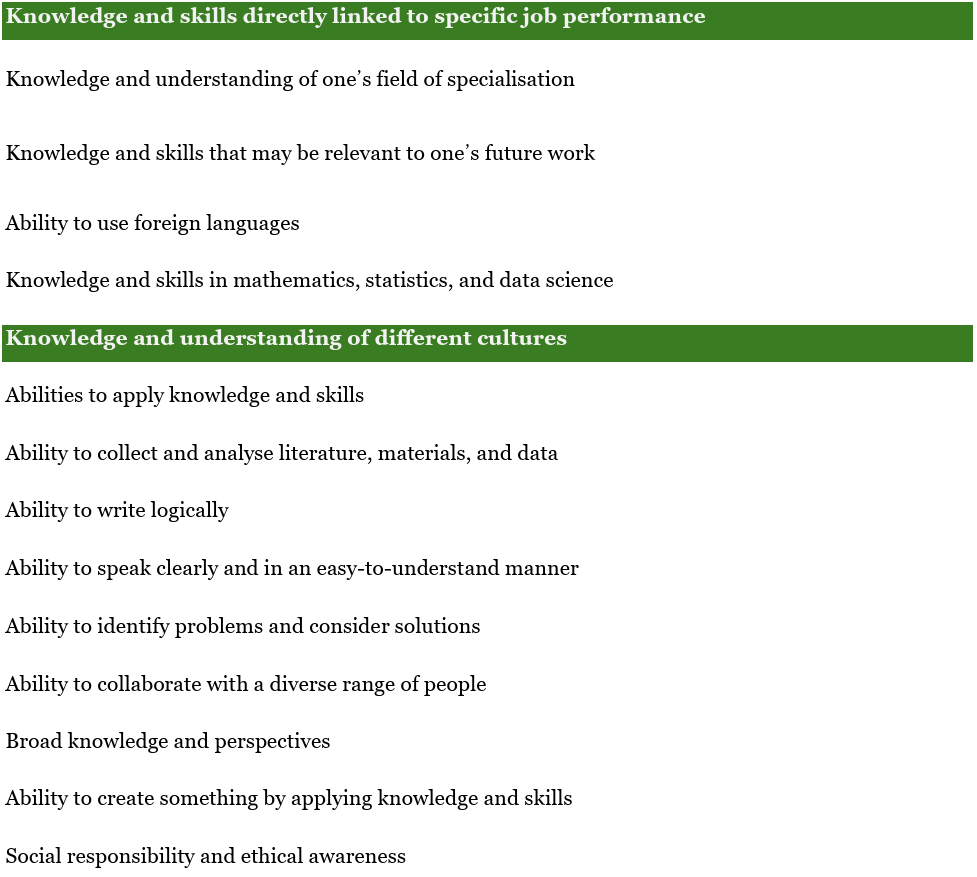
Figure 1: Items related to generic skills in the National Student Survey
We converted responses to these items into scores and summarised their mean values (Figure 2). The results show that, overall, students tended to rate themselves relatively highly on abilities that involve using their knowledge and skills, such as “the ability to collaborate with a diverse range of people” and “broad knowledge and perspectives”. The most striking finding, however, was that while self-evaluations of “knowledge and understanding of one’s field of specialisation” were high, “the ability to use foreign languages” received the lowest ratings among all items. A related item, “knowledge and understanding of different cultures”, also received lower self-evaluations compared with other items. Across the three survey rounds, Hiroshima University’s results for these items showed trends similar to those observed at universities nationwide. Interestingly, in the 2019 and 2021 surveys, Hiroshima University students’ self-evaluations for “knowledge and understanding of different cultures” were slightly higher than the overall average (they were at a similar level in 2022).
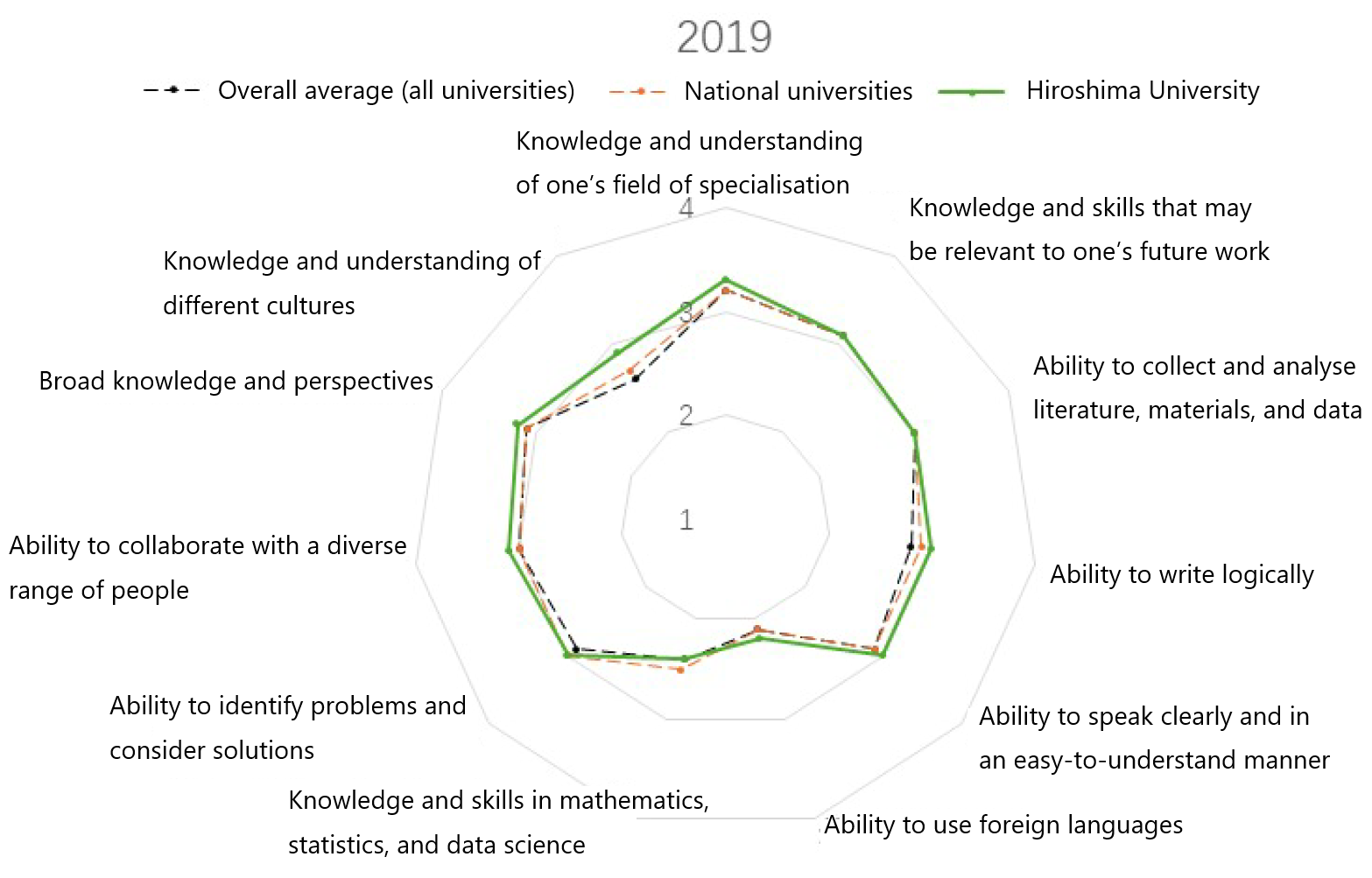
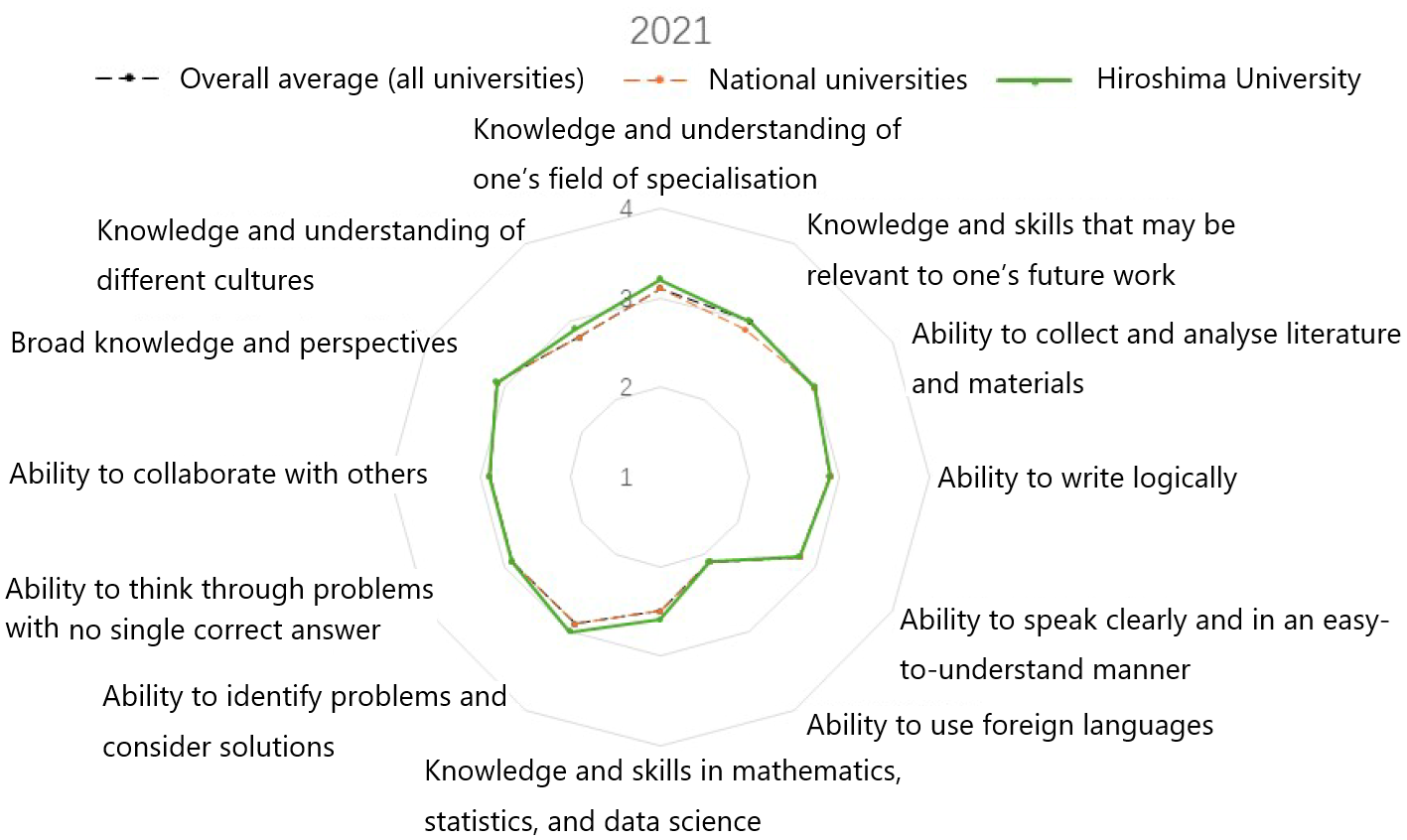
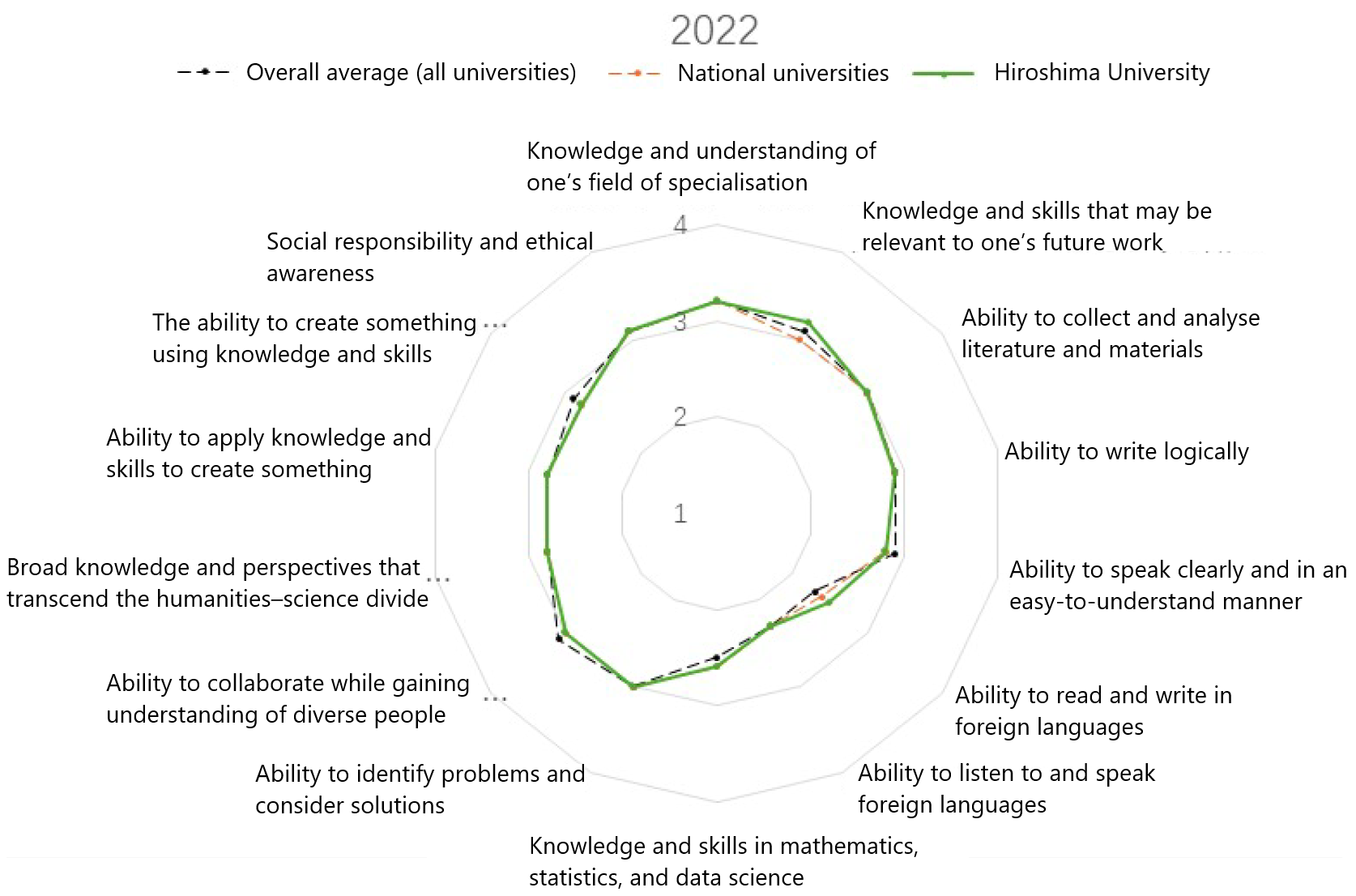
Figure 2: Comparison of self-evaluations of abilities acquired through university studies
Provision of activities that enhance foreign language proficiency
Then, why do students not feel that their foreign language proficiency has improved through university studies? What kinds of educational activities should universities provide to enable students to feel that their foreign language skills have improved? We sought insights into these questions from this National Student Survey. One survey item asks: “How useful do you think the following experiences during your time at university have been?” This allows us to examine both students’ participation in and their evaluations of educational activities provided by the university. Although the response options differ slightly across the three survey rounds, focusing on items that potentially contribute to the development of foreign language proficiency reveals four relevant activities:
a) “study abroad or overseas training (including short-term programmes)”,
b) “online courses offered by overseas universities and similar institutions (including online study abroad)”,
c) “opportunities to interact on campus with students from different cultural backgrounds”, and
d) “enrolling in courses taught mainly in English (excluding language subjects)”.
We converted the evaluations of these activities, as given by students who had participated in them, into scores and compared them (Figure 3). We found that Hiroshima University students generally rated the educational activities offered at our institution as more useful than students at universities nationwide.
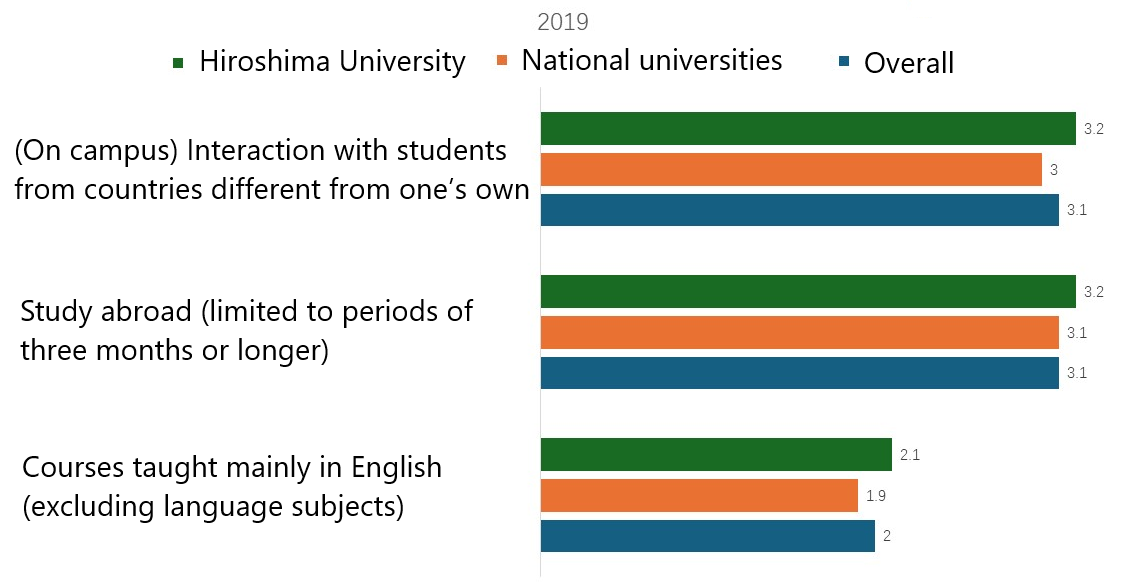
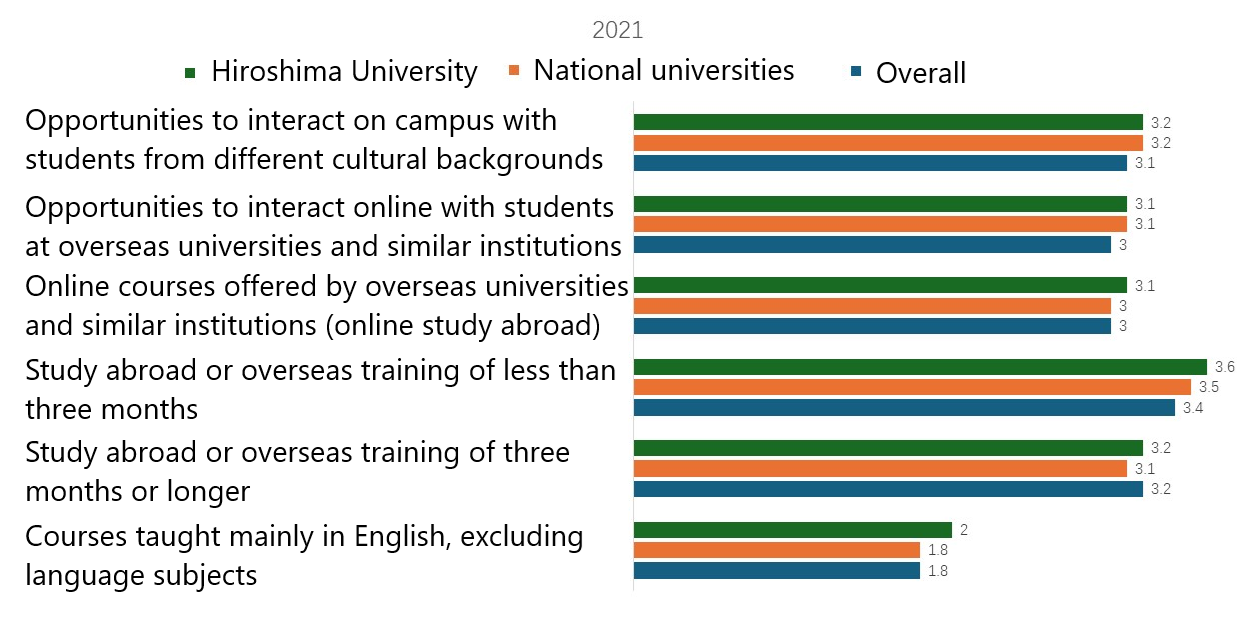
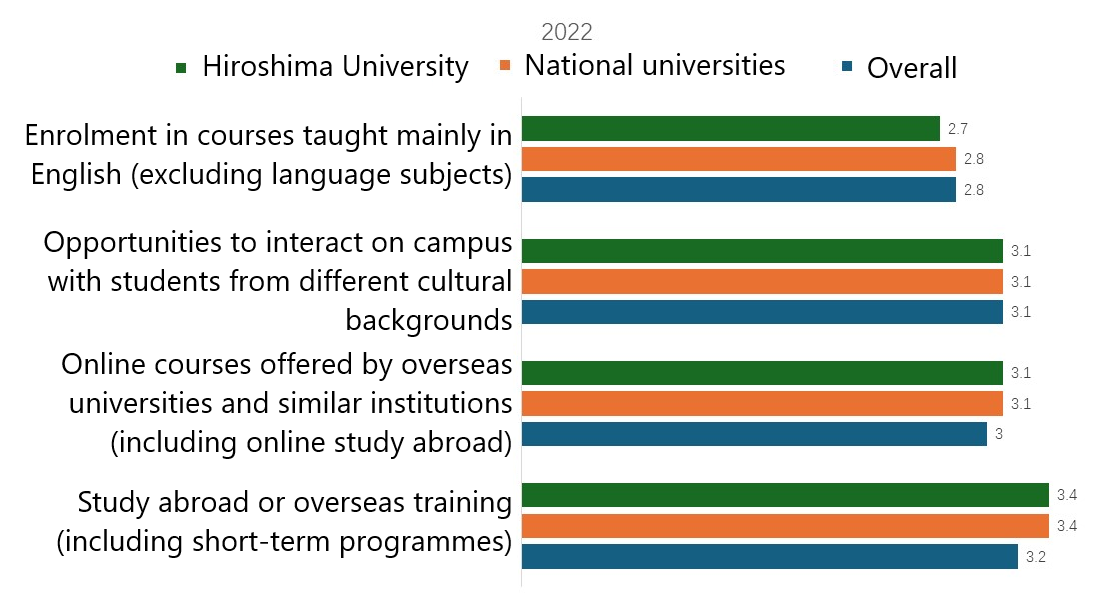
Figure 3: Comparison of the perceived usefulness of educational activities that support the development of foreign language proficiency
Next, we examined the proportion of Hiroshima University students who had taken part in these international learning opportunities (online study abroad, interactions with students from different cultural backgrounds, and courses taught in English), as shown in Figure 4. It becomes apparent that the majority had not participated in such activities at all. This suggests that the low self-evaluations of intercultural understanding and foreign language proficiency may be partly attributable to the limited participation in these activities.
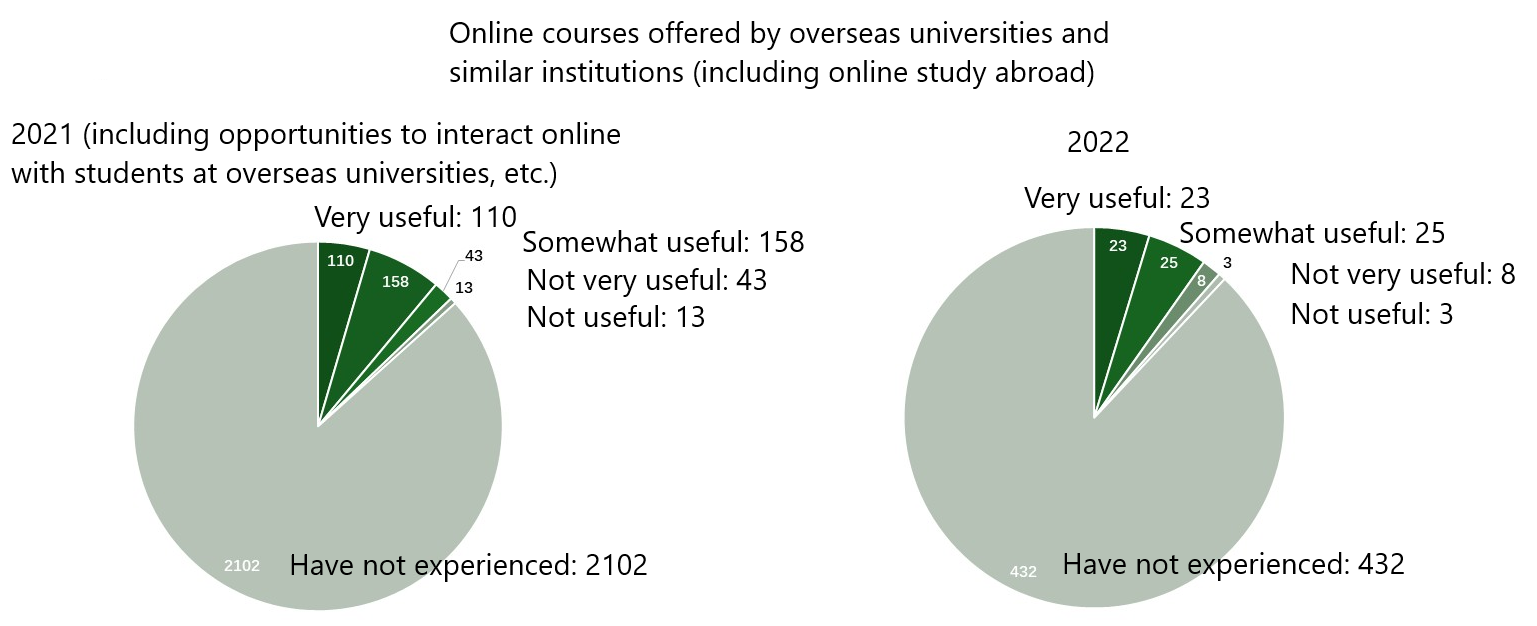
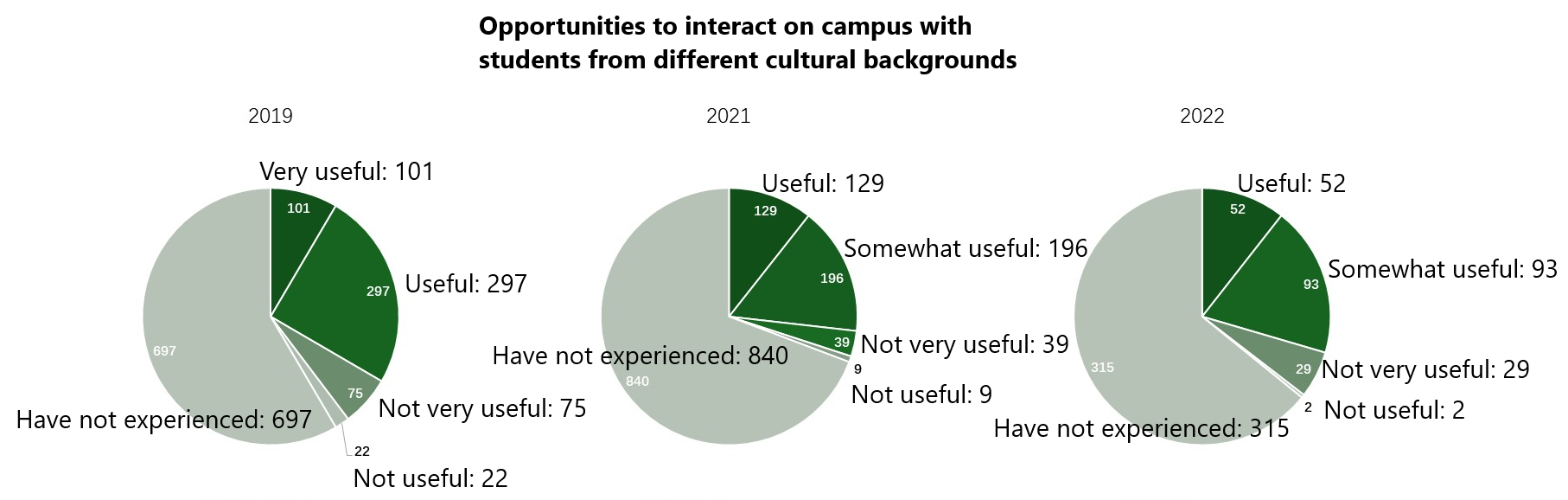
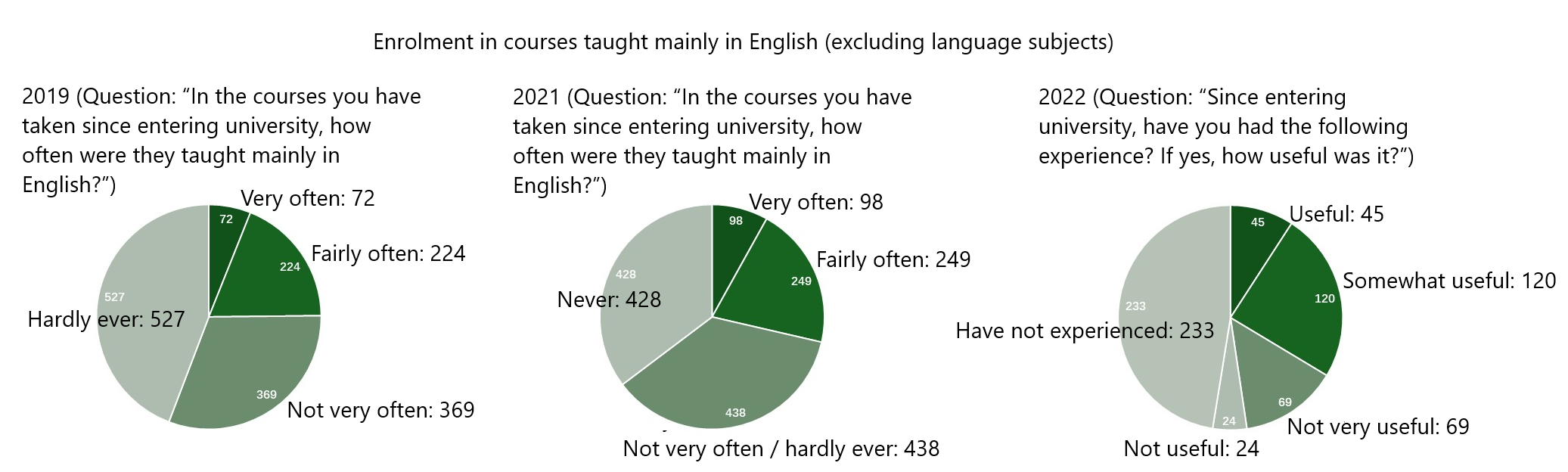
Figure 4: Participation in educational activities leading to the improvement of foreign language skills at Hiroshima University
Conclusion
Looking back over the results of the three survey rounds, Hiroshima University students’ subjective evaluations of the abilities they gained through university studies were, overall, similar to trends observed at universities nationwide. A particularly noteworthy finding, consistent with the national picture, is that self-evaluations of intercultural understanding and foreign language proficiency were especially low. Moreover, Hiroshima University received evaluations from the students that were comparable to or higher than those for universities nationwide in relation to educational activities that can enhance foreign language proficiency. However, relatively few students actually participated in these activities, which appears to have limited improvements in overall evaluations. In light of these findings and given Hiroshima University’s stated goal of “establishing an integrated education system to foster global human resources”, the university arguably needs to make more systematic and wide-reaching efforts to disseminate the outcomes of its internationalisation initiatives so far, and to enable more students to experience tangible gains in their foreign language proficiency.
* This report was developed by the Student Staff member, WANG Kaibiao.
Contact Us
Center for Academic Practice and Resources
