Home
Home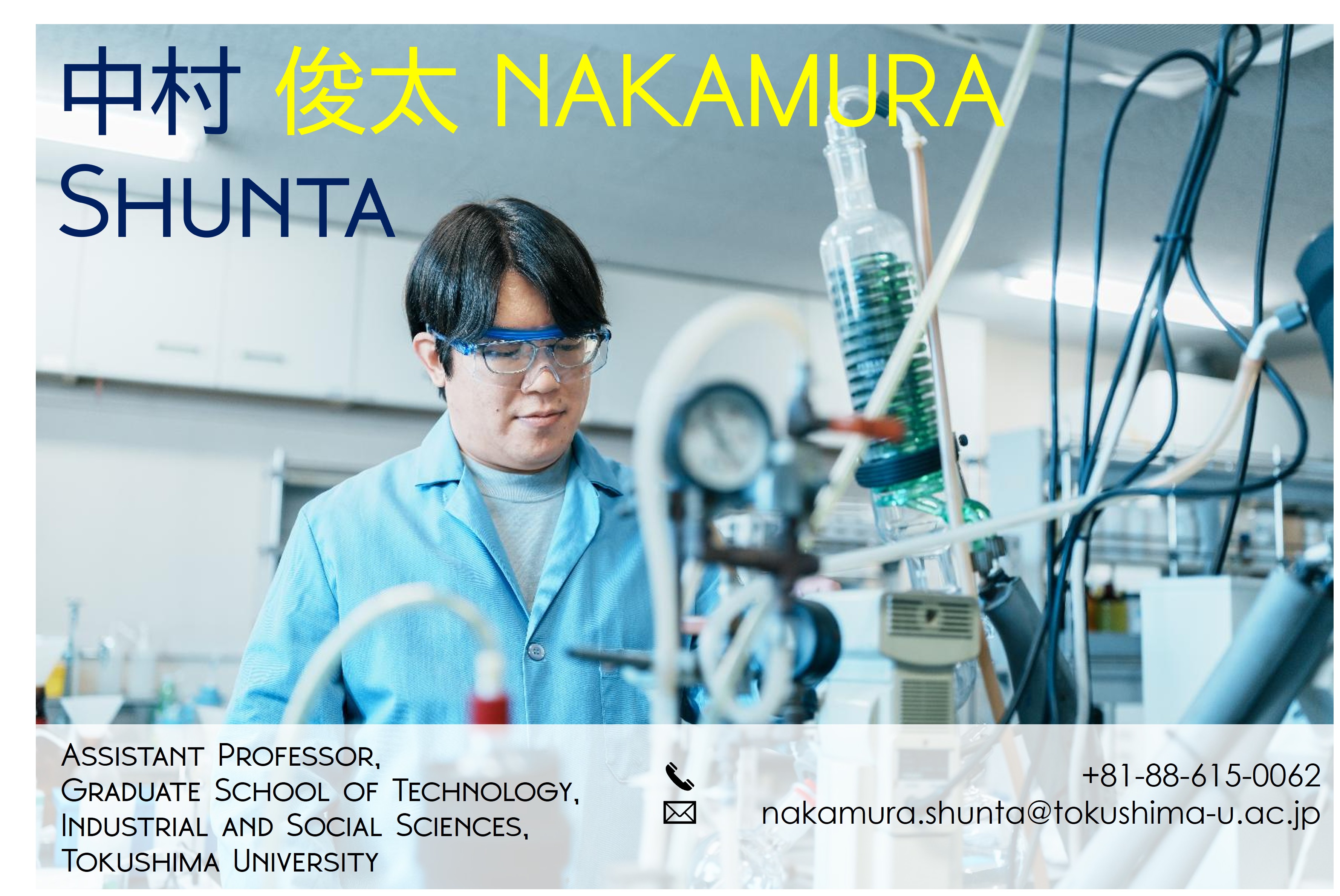

- Shunta Nakamura, Hayato Sakai, Masaaki Fuki, Rikuto Ooie, Fumitaka Ishiwari, Akinori Saeki, Nikolai V. Tkachenko, Yasuhiro Kobori, Taku Hasobe, Thermodynamic Control of Intramolecular Singlet Fission and Exciton Transport in Linear Tetracene Oligomers, Angewandte Chemie International Edition, 2023, 62, e202217704. DOI
- Shunta Nakamura, Hayato Sakai, Hiroki Nagashima, Masaaki Fuki, Kakeru Onishi, Ramsha Khan, Yasuhiro Kobori, Nikolai V. Tkachenko, Taku Hasobe, Synergetic Role of Conformational Flexibility and Electronic Coupling for Quantitative Intramolecular Singlet Fission, The Journal of Physical Chemistry C, 2021, 125, 18287-18296. DOI
- Shunta Nakamura, Hayato Sakai, Hiroki Nagashima, Yasuhiro Kobori, Nikolai V. Tkachenko, Taku Hasobe, Quantitative Sequential Photoenergy Conversion Process from Singlet Fission to Intermolecular Two-Electron Transfers Utilizing Tetracene Dimer, ACS Energy Letters, 2019, 4, 26-31. DOI
To view a more comprehensive list of publications, please click on the "researchmap" link below.


Dr. Shunta Nakamura graduated with a bachelor's degree from the Faculty of Science and Technology, Keio University (Japan) in 2017, and also obtained his Ph.D. from the Graduate School of Science and Technology at Keio University in 2021. In 2019, Dr. Nakamura was also appointed as a non-tenured Research Associate at the Keio University Graduate School of
Science and Technology as part of a Research Encouragement program, followed by an appointment as a Japan Society for the Promotion of Science (JSPS) Research Fellow in 2020 at Keio University. In 2022, Dr. Nakamura moved to Northwestern University (USA) for a postdoctoral fellow position, and finally came to Tokushima University (Japan) in December, 2024, where he is now an assistant professor.

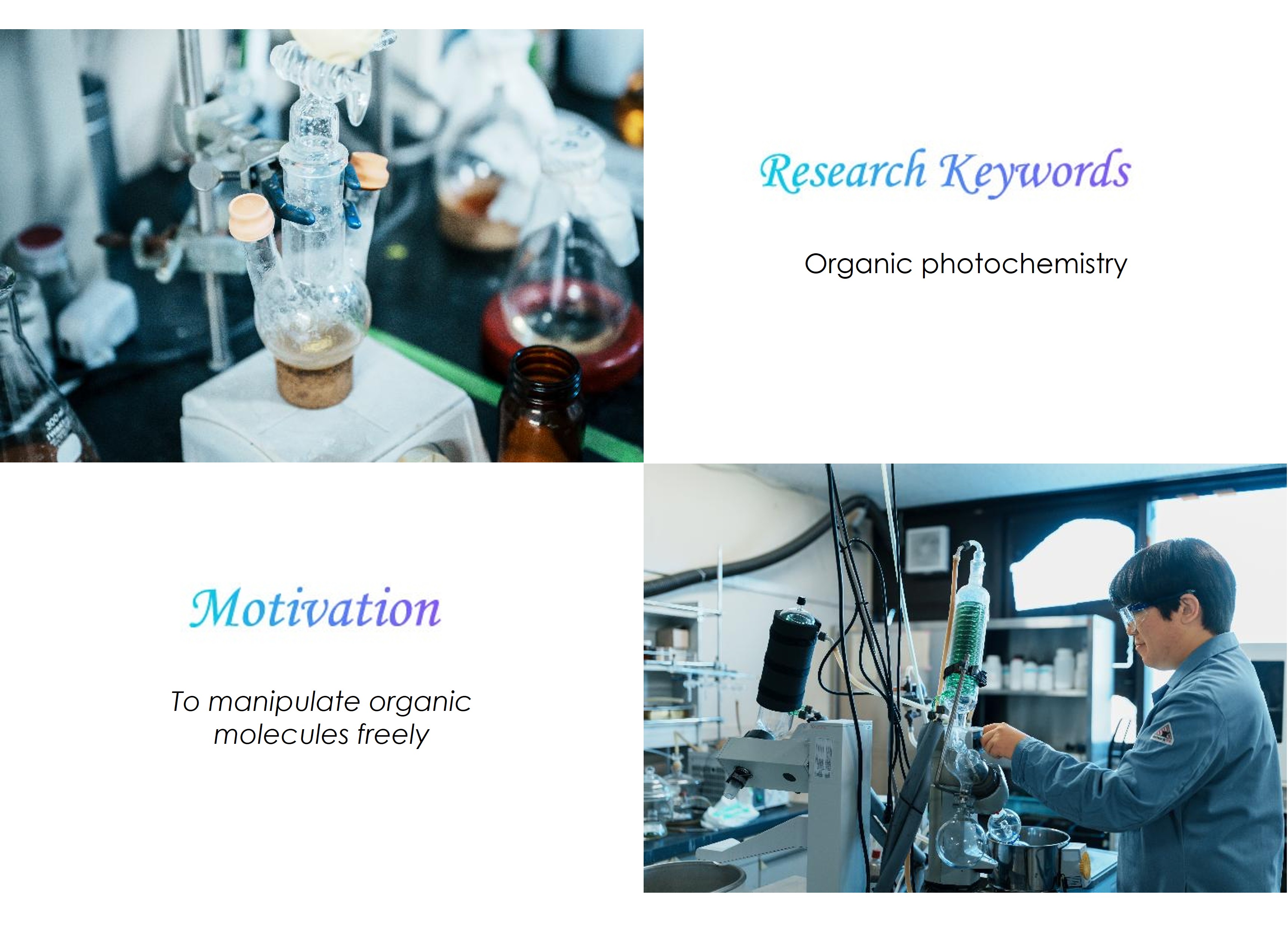
Organic materials, composed primarily of carbon and elements such as hydrogen, oxygen, and nitrogen, can be designed at the molecular level to be lightweight and highly flexible. Photofunctional organic materials in particular induce various reactions driven by light and has already been put into practical use in applications such as organic light emitting diode (OLED) displays. Such materials are also expected to be applied in fields including information technology, energy, and medicine, where interdisciplinary and multifaceted research approaches are required for scientific advancement. Dr. Nakamura is one of the researchers at the forefront of this field, exploring the potential of photofunctional organic materials, specifically leveraging organic materials in areas such as improving the energy conversion efficiency of solar cells and developing quantum sensors that can serve as alternatives to diamond nitrogen-vacancy (NV) centers.