Home
Home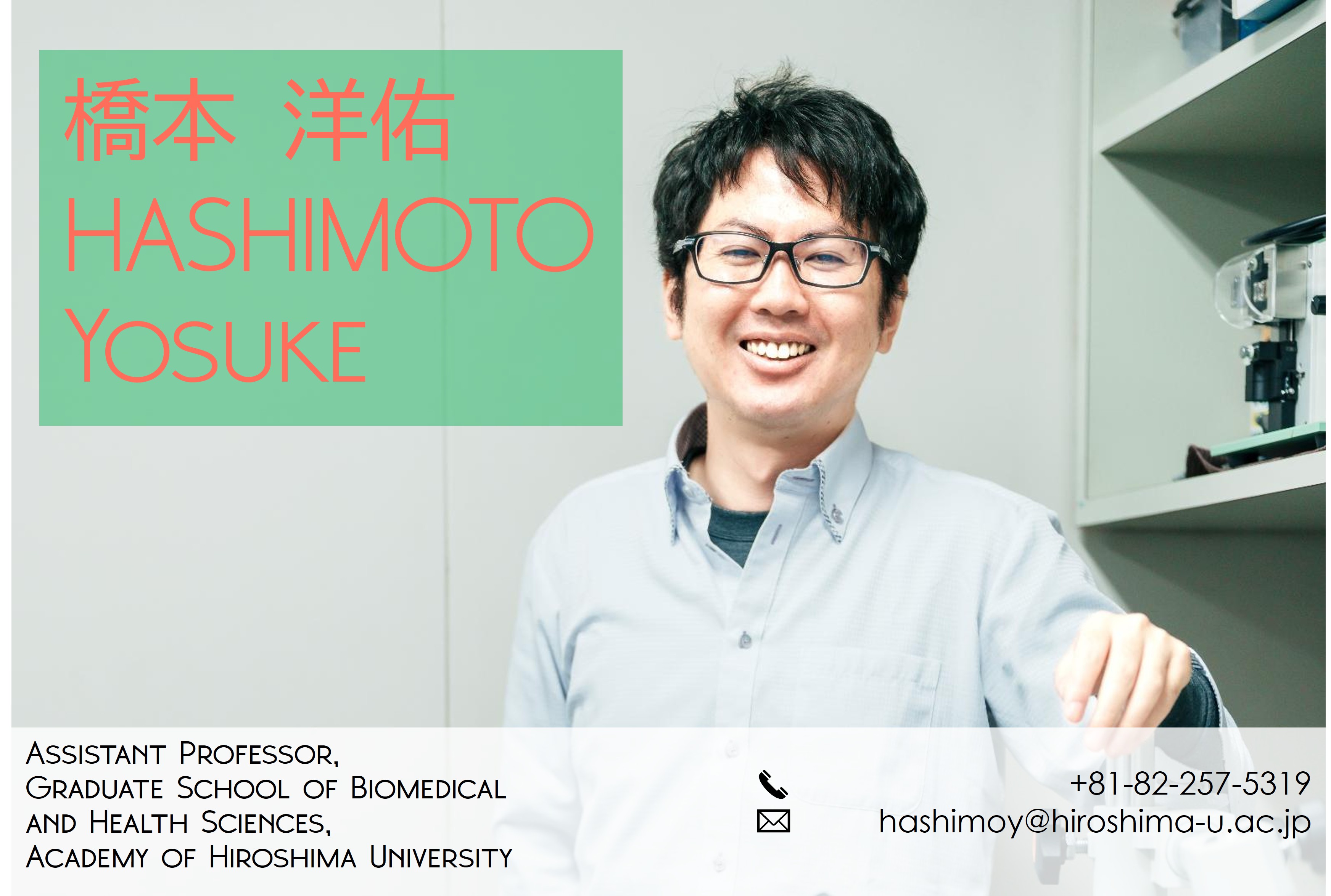

- Y. Hashimoto, C. Greene, N. Hanley, N. Hudson, D. Henshall, K.J. Sweeney, D.F. O'Brien, M.
Campbell. Pumilio-1 mediated translational control of claudin-5 at the blood-brain barrier. Fluids Barriers CNS 21, 52 (2024). DOI
- Y. Hashimoto, K. Poirier, N. Boddaert, L. Hubert, M. Aubart, A. Kaminska, M. Alison, I. Desguerre, A. Munnich, M. Campbell. Recurrent de novo mutations in CLDN5 induce an anion-selective blood-brain barrier and alternating hemiplegia. Brain 145(10), 3374-3382 (2022). DOI
- Y. Hashimoto, K. Shirakura, Y. Okada, H. Takeda, K. Endo, M. Tamura, A. Watari, Y. Sadamura, T. Sawasaki, T. Doi, K. Yagi, M. Kondoh. Claudin-5-binders enhance permeation of solutes across the blood-brain barrier in a mammalian model. J. Pharmacol. Exp. Ther. 363(2), 275-283 (2017). DOI
To view a more comprehensive list of publications, please click on the "researchmap" link below.


Dr. HASHIMOTO Yosuke graduated with a bachelor’s degree from the Faculty of Pharmaceutical Sciences at Tokushima University (Japan) in 2012, and a master’s degree from the Graduate School of Pharmaceutical Sciences at Tokushima University in 2014. Dr. HASHIMOTO moved to Osaka University, where he obtained his Ph.D. from the Graduate School of Pharmaceutical Sciences in 2017. Following this, from 2017–2019, Dr. HASHIMOTO then moved to Nagoya University (Japan) as a Japan Society for the Promotion of Science (JSPS) Research Fellow, and then from 2019 to 2024, spent five years abroad at Trinity College Dublin in Ireland as a visiting researcher and postdoctoral fellow. Upon returning to Japan in 2024, Dr. HASHIMOTO assumed the position of Assistant Professor in the Laboratory of Molecular Systems Pharmaceutics in the Graduate School of Biomedical and Health Sciences at Hiroshima University (Japan).

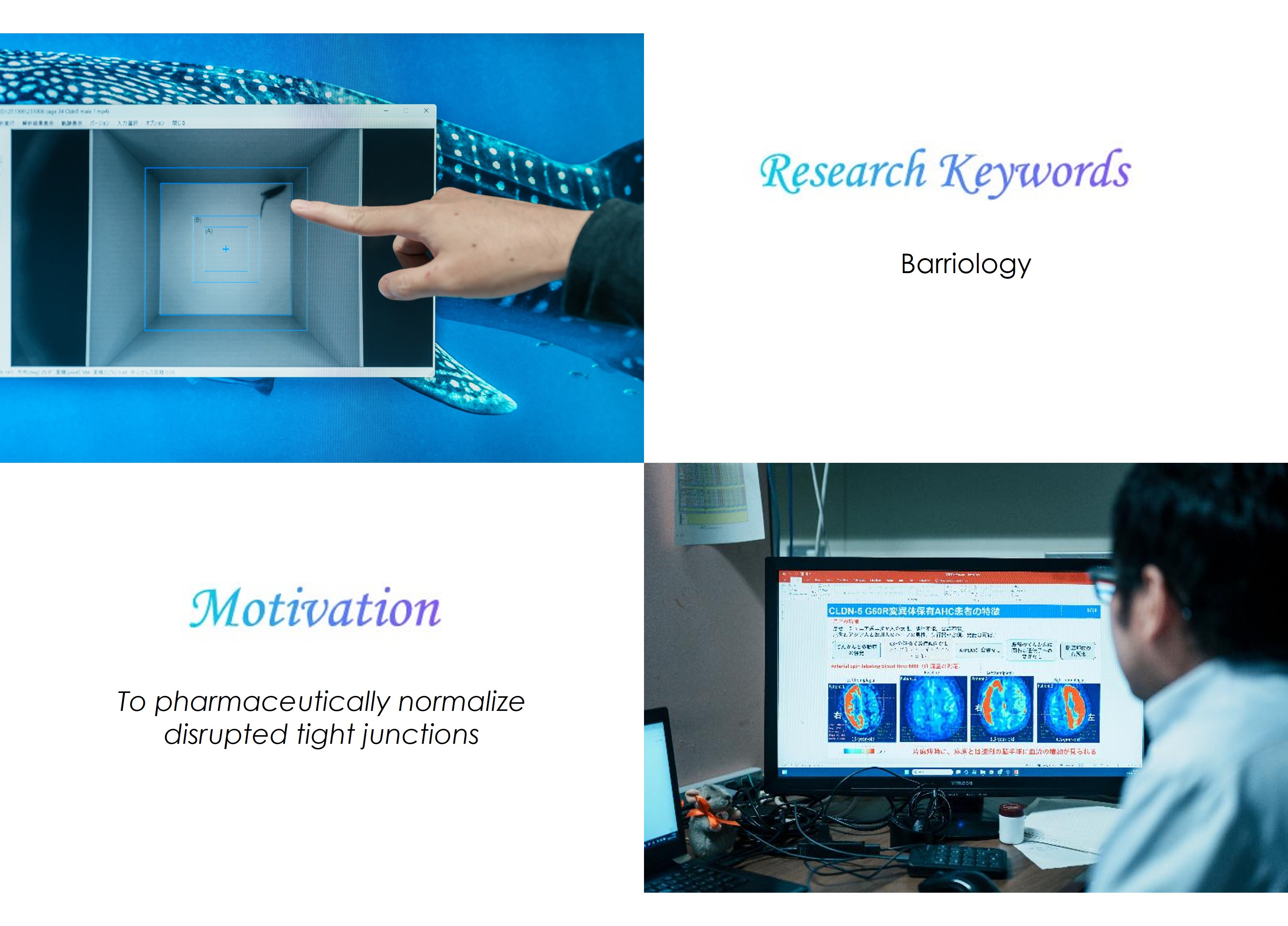
The capillaries that form the vascular network within the brain possess stable tight junctions between endothelial cells, and function as the “Blood-Brain Barrier” (BBB). The BBB maintains the brain’s homeostasis by Claudin-5-based tight junctions that prevent the influx of blood-borne molecules and ions. Dr. HASHIMOTO has been conducting extensive research on the expression and regulation of Claudin-5. Abberations in Claudin-5 can be life-threatening, possibly leading to the development of serious diseases and neurological disorders which currently have no cure due to their hereditary nature. However, Dr. HASHIMOTO believes that cures are possible if abberant Claudin-5 can be appropriately regulated.