Home
HomeInquiries on the study
Meng Qu
Associate Professor, Hiroshima University Graduate School of Humanities and Social Sciences
Email: meng-qu-mo * hiroshima-u.ac.jp
(Note: Please replace * with @)
Inquiries on the story
Hiroshima University Public Relations Office
E-mail: koho * office.hiroshima-u.ac.jp
(Note: Please replace * with @)
Grounding intermittent art festivals such as the Setouchi Triennale within the resource capacities and social thresholds of the island communities that host them is a path to the sustainable long-term revitalization of these communities.
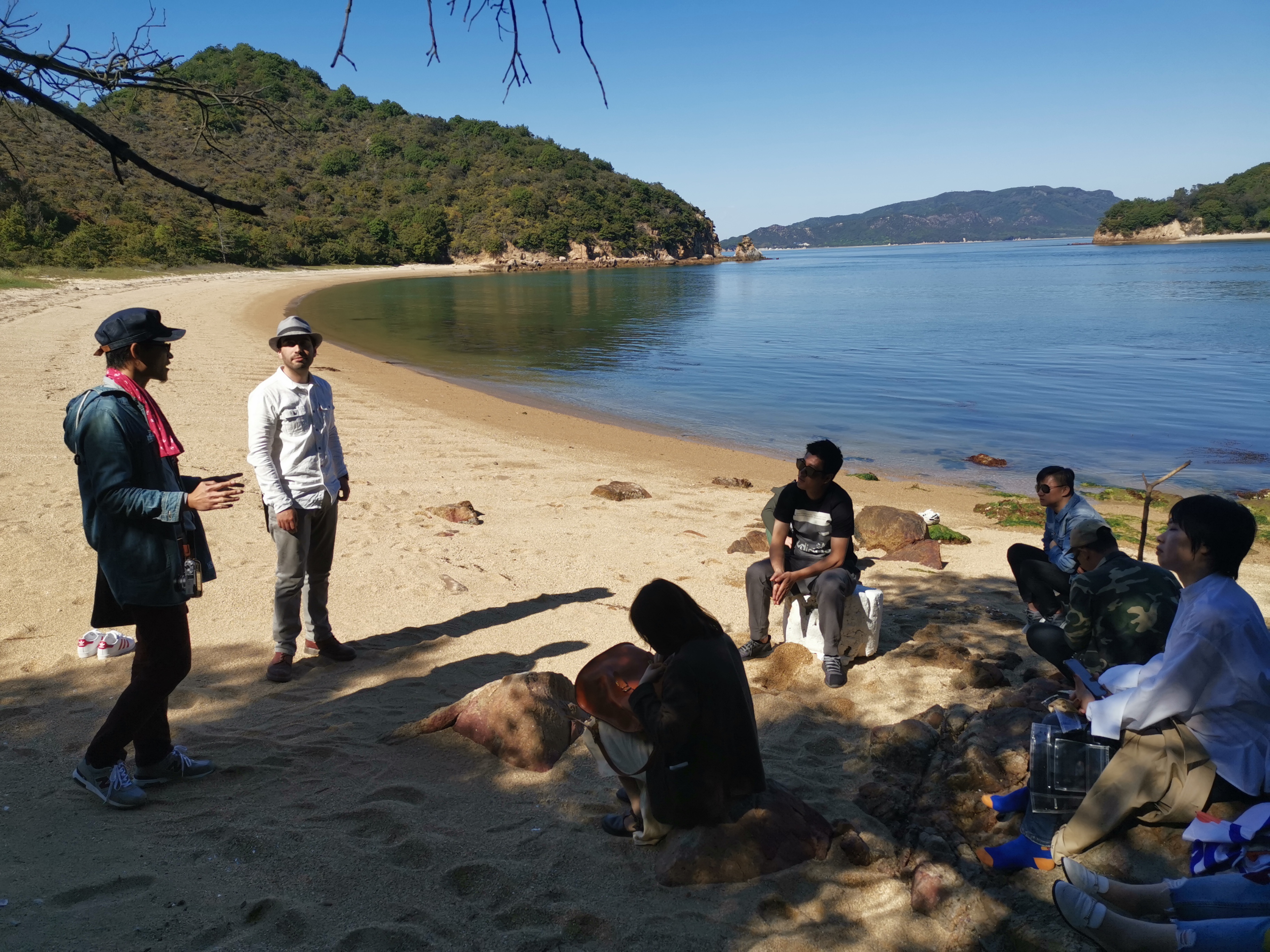
Beach lecture on Naoshima during the 2019 Setouchi Triennale. (Meng Qu / Hiroshima University)
The Setouchi Triennale is a large-scale art festival that takes place once every three years. It is held over 100 days across 12 islands and several coastal areas in the Setouchi Inland Sea—the body of water separating Honshu, Shikoku, and Kyushu, home to almost 3000 islands—with the intention of revitalizing the islands of the region, which suffer from severe depopulation and out-migration issues. While the Triennale does boost tourism and the local economy over the course of the event, it is much harder to assess its effect on achieving long-term, sustainable revitalization.
A researcher at Hiroshima University has conducted a ten-year fieldwork study of three installments of the Setouchi Triennale, analyzing surveys and interviews with community stakeholders to understand how islanders manage the contrast between the roughly 100-day tourism boom generated by the festival and the prolonged tourism lull between its triennial editions, and what this means for local revitalization.
The findings were published in the Journal of Marine and Island Cultures on April 30, 2026.
Tourism-associated mega art festivals (also called Triennale Tourism), such as the Setouchi Triennale, fall under the category of intermittent tourism: tourism that occurs during the course of the festival and falls off precipitously afterwards. Hence, the boost to the local economy is limited: the locations may host millions of visitors during the event, but far less at other times. This is worsened for peripheral island communities, as they are isolated and may be difficult to travel to outside of the event. Meng Qu, associate professor at Hiroshima University’s Graduate School of Humanities and Social Sciences, set out to answer two questions: “How can large-scale art festivals be organized to yield sustainable benefits for these peripheral island communities? Specifically, what tourism processes do these festivals engender, and how can these mechanisms be harnessed to support remote insular regions?”
Previous studies of the impact of the Triennale have been limited to Shodoshima, the largest and most economically advantaged of the sites. In this study, Qu focused on the other five major sites - Naoshima, Teshima, Inujima, Ogijima, and Megijima – with Shodoshima as the standard. A mixed method design, which comprised quantitative (surveys) followed by qualitative (interviews and follow up interviews) methods, was used to examine the effects of the Triennale.
“The questionnaire data of small tourism businesses have a considerable emphasis on the interactive window to perceive the tourism impact between tourists and residents, and the interview data with both residents and STBs (small tourism businesses) are used as follow-up to help explain the questionnaire results,” Qu says. The questionnaire and interview questions were based on an earlier survey, with more detailed questions about the Setouchi Triennaleʼs positive influence and negative impacts added; 128 STBs were surveyed.
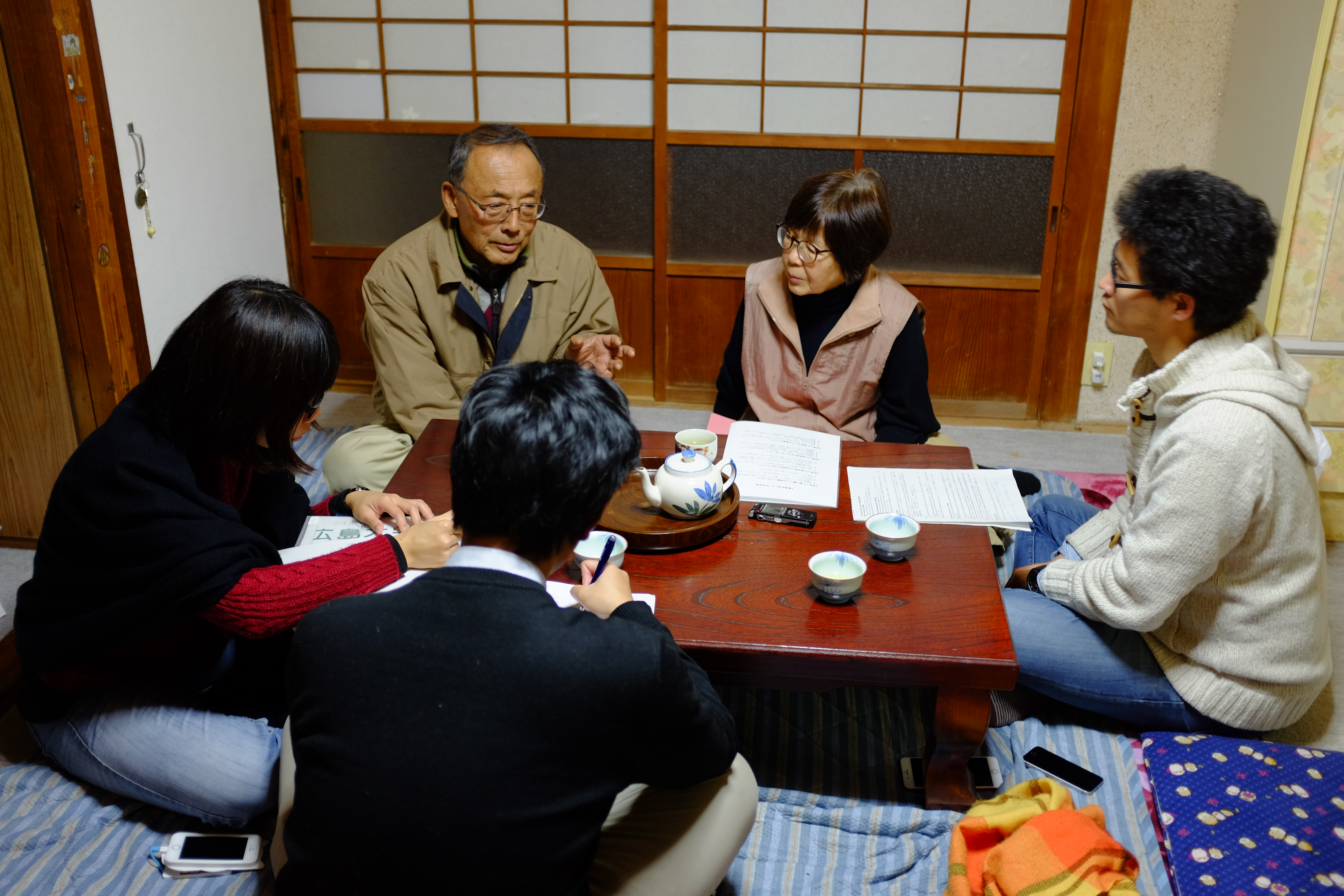
Interview conducted as part of fieldwork on Teshima Island after the 2016 Setouchi Triennale. (Meng Qu / Hiroshima University)
Analysis of the data revealed that the intermittent cultural energy of large-scale art festivals can only be converted into sustainable revitalization when the Community-engaged Art Festival Tourism Revitalization moves beyond exogenous tourism spikes to internalize the socio-economic price and structural vulnerabilities of peripheral archipelagos. While social entrepreneurship and deep relational exchange offer pathways for resilience, their success depends on balancing the "festivalness" with the community’s limited resource capacities and social thresholds.
"While rural art festival facilitates temporary vitality, long-term archipelagos resilience requires a shift from urban-centric economic metrics toward a model that values moderate interaction and spatial justice” Qu concludes. “Instead of relying solely on exogenous factors brought by art intervention, the central role of rural art festival must be examined through community-level response and endogenous efforts. At the same time, the conclusions of this study imply that the revitalization of similar 'art island' models requires an archipelagic perspective of evaluation, rather than focusing on a single island community as a perfect, isolated case.”
About the study
- Journal: Journal of Marine and Island Cultures
- Title: Revitalization at a Price? Intermittent Art Festivals on Peripheral Archipelagos
- Author: Meng Qu
- DOI: 10.21463/jmic.2026.15.1.07
- Date: April 30, 2026
Media Contact