Home
HomeInquiries on the study
Tomoyuki Akita
Lecturer, Hiroshima University Graduate School of Biomedical and Health Sciences
E-mail: tomo-akita * hiroshima-u.ac.jp
(Note: Please replace * with @)
Inquiries on the story
Hiroshima University Public Relations Office
E-mail: koho * office.hiroshima-u.ac.jp
(Note: Please replace * with @)
Over decades of sustained, integrated national viral hepatitis control, Japan has seen substantial reductions in HBV- and HCV-related disease burden and hepatocellular carcinoma mortality.
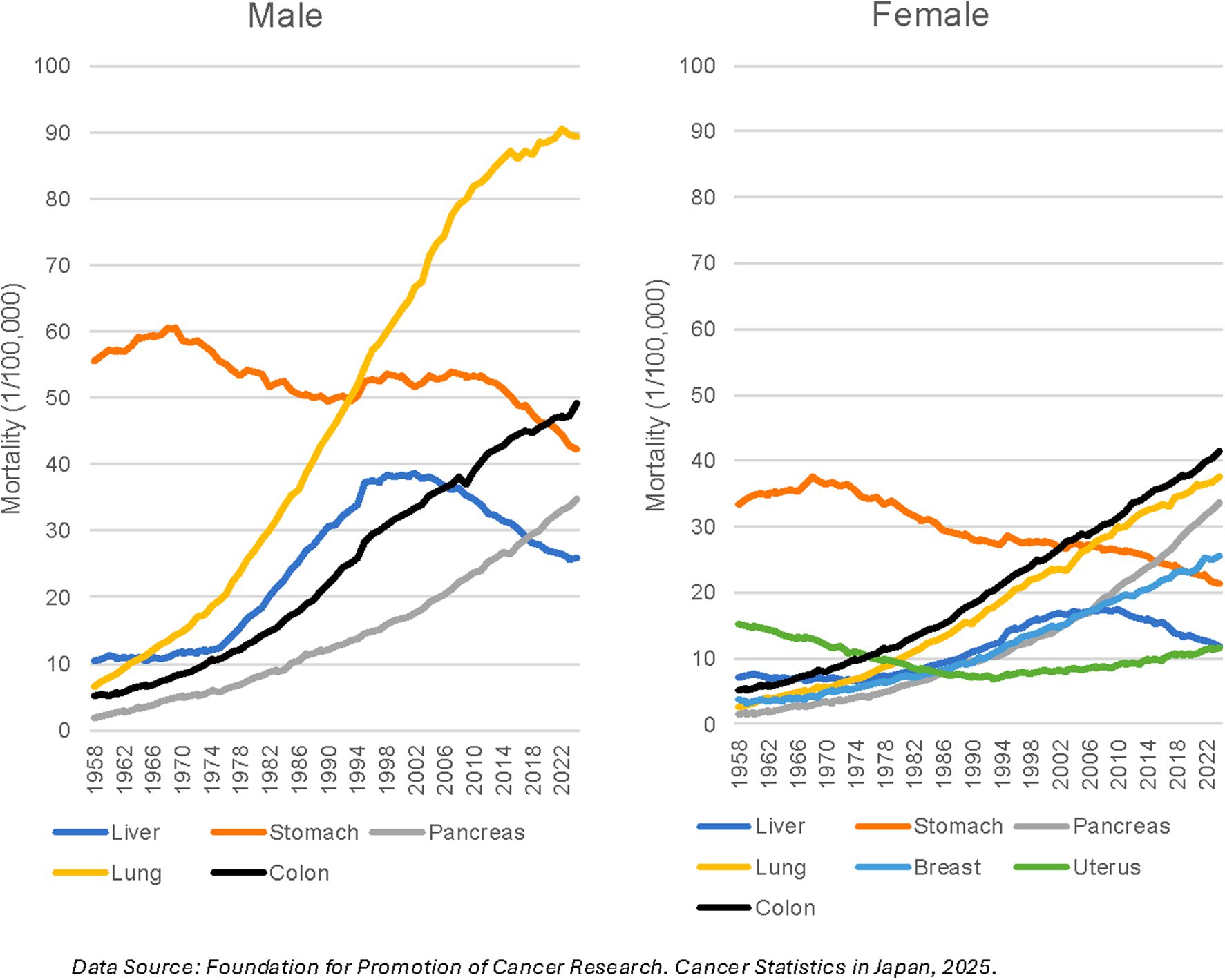
Long-term trends in cancer-specific mortality in Japan between 1958 and 2022, by sex. Mortality rates for major cancers among males and females, including liver (blue, including both viral- and non-viral-related liver cancer), stomach (orange), pancreatic (grey), lung (yellow), colon (black), breast (light blue), and uterine cancers (green). Liver cancer mortality increased until the early 2000s and subsequently declined, contrasting with continuing increases in mortality from several other major cancers. (Junko Tanaka, et al. The Lancet Regional Health - Western Pacific. August 17, 2026)
Chronic hepatitis B virus (HBV) and hepatitis C virus (HCV) infections are major causes of liver cirrhosis and hepatocellular carcinoma (HCC). Due to the public health burden of viral hepatitis, Japan enacted systematic, nationwide countermeasures, starting with improvements in blood safety and reductions in healthcare-associated transmission (from the 1970s onward); prevention of mother-to-child transmission (from 1986 onwards); and institutionalization of hepatitis control through legal and financial frameworks and expanded access to antiviral treatment (from the 2000s onwards).
A review paper by a research team at Hiroshima University investigated how coordinated policy frameworks and robust epidemiological infrastructure have been associated with reductions in viral hepatitis–related HCC in Japan, and what gaps remain toward achieving hepatitis elimination. In doing so, they highlight transferable lessons for countries seeking to eliminate viral hepatitis.
The review was published in the journal The Lancet Regional Health - Western Pacific on August 17, 2026.
“This study examines how the epidemiology of viral hepatitis and liver cancer in Japan has changed over nearly five decades of national hepatitis control measures, and what challenges remain as the country approaches the WHO 2030 hepatitis elimination targets,” says Tomoyuki Akita, lecturer at Hiroshima University’s Graduate School of Biomedical and Health Sciences. “Understanding the long-term population impact of [Japan’s viral hepatitis control] measures is important not only for evaluating Japan’s progress toward hepatitis elimination, but also for identifying the next priorities for liver cancer prevention.”
The researchers collected peer-reviewed research articles related to HCC, liver cancer, viral hepatitis, liver cirrhosis, and Japan, published between January 1970 and January 2026, through online searches of the PubMed database. They also manually searched government reports for additional sources, included data from their Epidemiological Research Group on Viral Hepatitis and its Long-term Course (VH-Epi), and incorporated data from national vital statistics and multiple large-scale statistics and surveillance databases.
Decades of hepatitis control have brought Japan closer to elimination ...
The prevalence of HBV and HCV has fallen drastically across Japan. In first-time blood donors—generally considered a healthy population—Hepatitis B surface antigen (HBsAg, a positive marker of HBV infection) fell from 0.63% in 1995–2000 to 0.13% in 2017–2021; in the same period, HCV antibody (anti-HCV, a positive marker of HCV infection) fell from 0.49% to 0.16% over the same periods. Among residents aged ≥40 years at health checkups, HBsAg fell from 1.16% in 2002 to 0.55% in 2021, while anti-HCV fell from 1.16% to 0.21% in the same period. The incidence of newly acquired HBV and HCV infections in blood donors representing historically low levels in Japan, at 2.38 per 100,000 person-years for HBV and 0.4 per 100,000 person-years for HCV.
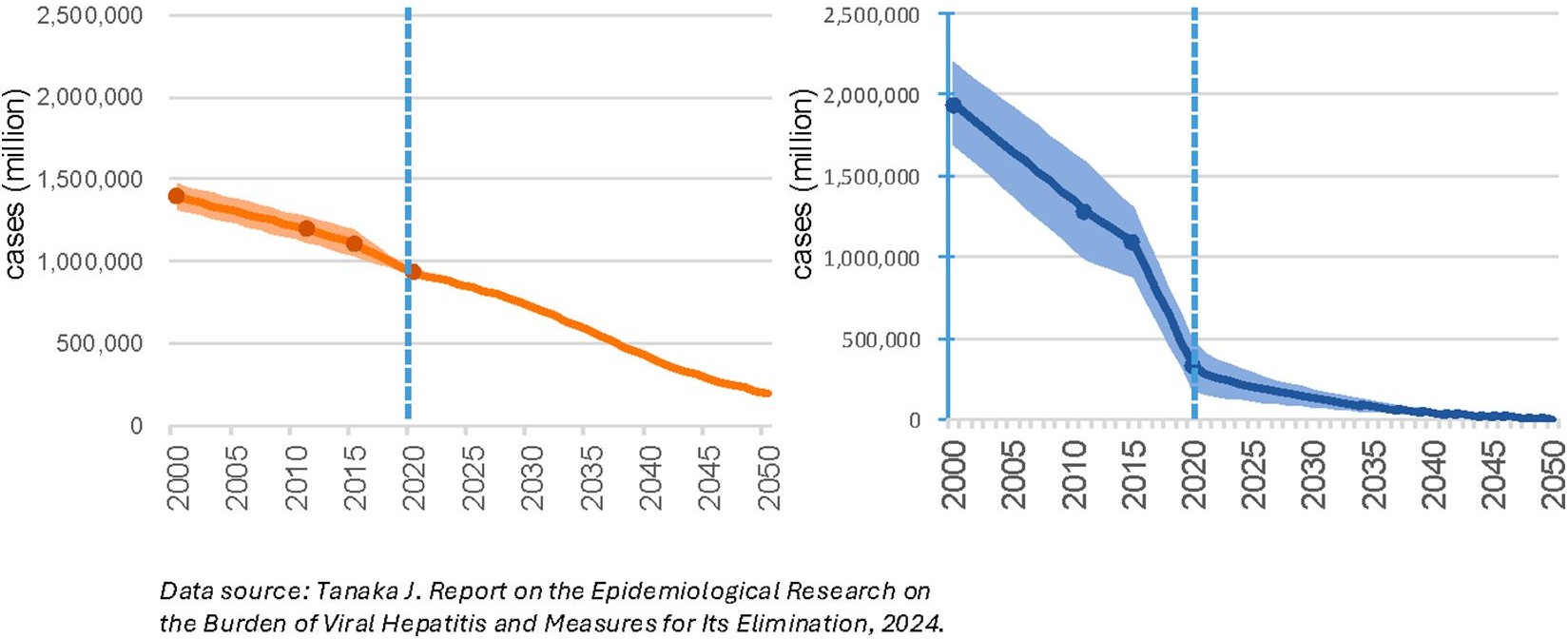
Estimated number of individuals living with chronic hepatitis B virus (orange) and hepatitis C virus (blue) infection in Japan between 2000 and 2020, with projected future trends to 2050. (Junko Tanaka, et al. The Lancet Regional Health - Western Pacific. August 17, 2026)
“One particularly striking finding is that among pregnant women born in or after 2000, HBsAg-positive individuals have become extremely rare, illustrating the intergenerational impact of Japan’s HBV mother-to-child transmission prevention program since 1986,” says Akita.
Viral hepatitis remains an important concern among several high-risk populations in Japan, including persons who inject drugs (PWID), men who have sex with men (MSM), migrants from regions where HBV is endemic, and incarcerated populations. Addressing viral hepatitis among these populations remains an important challenge as Japan moves toward elimination.
... while reshaping the landscape of liver cancer
At the same time, the decline in viral hepatitis-related HCC has reshaped the relative distribution of liver cancer causes in Japan. The proportion of HCC deaths attributed to non-viral causes increased from 6.8% in 1992 to 56.0% in 2019. This shift largely reflects the substantial decline in viral hepatitis-related HCC, rather than a comparable increase in the absolute burden of non-viral HCC. “In other words,” Akita says, “more than half of hepatocellular carcinoma deaths in Japan are now attributable to non-viral causes—a dramatic reversal from the era when viral hepatitis dominated the country’s liver cancer burden.”
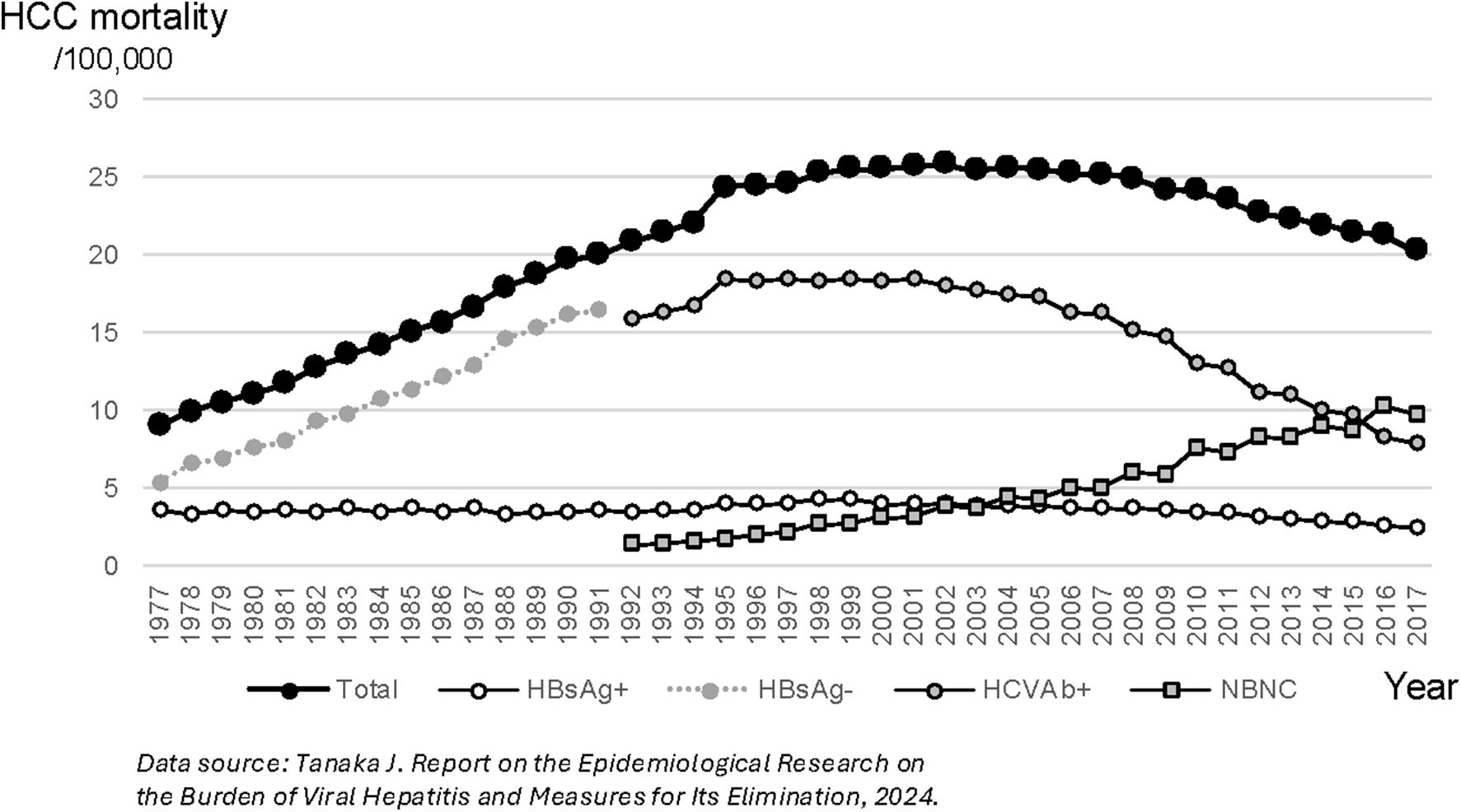
Temporal changes in total hepatocellular carcinoma (HCC) mortality and mortality associated with HBsAg-positive, HCVAb-positive, HBsAg-negative, and non-B non-C (NBNC) liver disease. HCV-related HCC mortality increased markedly during the late 20th century and subsequently declined, whereas the proportion of NBNC-HCC progressively increased over time, indicating an epidemiological transition toward non-viral causes. (Junko Tanaka, et al. The Lancet Regional Health - Western Pacific. August 17, 2026)
Non-viral causes include alcohol-related liver disease and metabolic dysfunction-associated steatotic liver disease (MASLD). As Japan approaches viral hepatitis elimination, maintaining the achievements of hepatitis control remains essential, while liver cancer prevention will also need to address these emerging non-viral causes. “Japan’s long-term, integrated hepatitis control strategy has substantially reduced HBV and HCV infections and related liver cancer deaths, bringing the country closer to hepatitis elimination,” Akita says. “The next step is to achieve and sustain viral hepatitis elimination while adapting liver cancer prevention to Japan’s changing disease landscape.”
The study was co-authored by Junko Tanaka, Ko Ko, Aya Sugiyama, Chanroth Chhoung, Akemi Kurisu and Tomoyuki Akita at Hiroshima University; Masahiro Satake at the Japanese Red Cross; and Tatsuya Kanto and Takaji Wakita at the Japan Institute for Health Security. Junko Tanaka and Tomoyuki Akita are corresponding authors.
This work was supported by the Ministry of Health, Labour and Welfare (MHLW) Policy Research for Hepatitis Measures Program (JPMH 22HC1001, JPMH 25HC1001).
About the study
- Journal: The Lancet Regional Health - Western Pacific
- Title: Liver cancer in Japan: epidemiological transition, viral hepatitis control, and emerging challenges
- Authors: Junko Tanaka, Ko Ko, Aya Sugiyama, Chanroth Chhoung, Akemi Kurisu, Masahiro Satake, Tatsuya Kanto, Takaji Wakita, Tomoyuki Akita
- DOI: 10.1016/j.lanwpc.2026.101900
- Date: August 17, 2026
- Profile of Executive Director Junko Tanaka / Medical Policy Office
- Profile of Lecturer Akita Tomoyuki / Graduate School of Biomedical and Health Sciences
Media Contact