Published in The Journal of Allergy and Clinical Immunology: In Practice
Symptoms of depression are common among people with asthma, but growing evidence suggests they may arise from biological mechanisms different from those underlying major depressive disorder.
New research reveals that depression linked to asthma may have a different biological basis than primary depression. (Science Photo Library via Canva)
Researchers from Hiroshima University in Japan and collaborating institutions have found that adults with asthma who experience symptoms of depression have elevated blood levels of a protein called brain-derived neurotrophic factor, or BDNF. This protein is typically reduced in people with major depressive disorder. The findings, published in The Journal of Allergy and Clinical Immunology: In Practice, offer new insight into how depression associated with asthma may differ biologically from primary depression.
Depressive symptoms in asthma are often linked to poorer asthma control and more severe disease. While reduced BDNF levels are a well-known feature of major depressive disorder, the protein also has important roles outside of the brain. BDNF is produced not only in the brain but also in the lungs, where its levels rise during airway inflammation. In the lungs, BDNF affects airway nerves and inflammatory processes, which can increase airway sensitivity and worsen asthma symptoms. This raises questions about whether depressive symptoms in asthma follow the same biological pattern as primary depression.
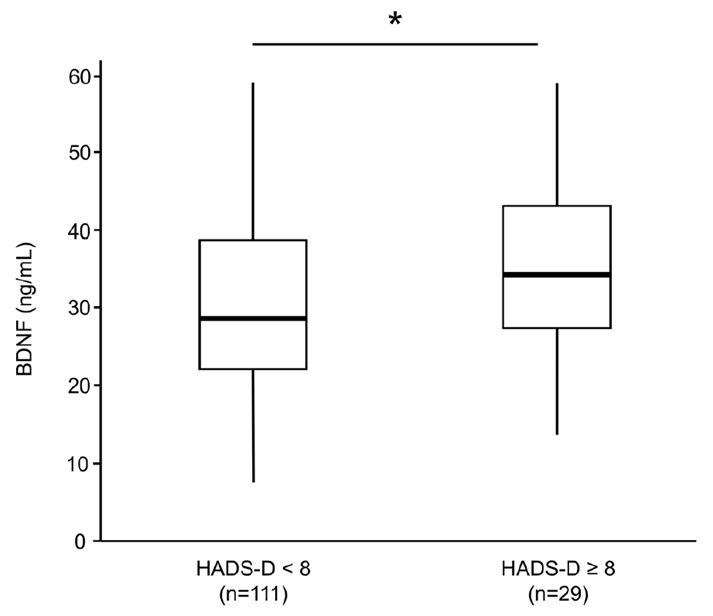
People with asthma who reported symptoms of depression (HADS-D ≥ 8) had higher levels of BDNF in their blood than those without depressive symptoms (HADS-D < 8). (Kawamoto et al. (2025), The Journal of Allergy and Clinical Immunology: In Practice, CC BY 4.0)
To explore this question, the research team studied 140 adults with asthma. Blood levels of BDNF were measured, and symptoms of depression and anxiety were assessed. Participants also wore motion sensors to track daily physical activity. This allowed researchers to examine links between asthma severity, activity levels, and mental health.
“Unlike major depressive disorder, patients with asthma who have depressive symptoms show higher, not lower, serum BDNF levels. Moreover, elevated BDNF is associated with greater asthma severity,” says study corresponding author Hiroshi Iwamoto, associate professor at Hiroshima University’s Graduate School of Biomedical and Health Sciences. “These results suggest that the biological mechanisms underlying depressive symptoms in asthma may be different from those in major depressive disorder.”
Lower levels of daily physical activity were also associated with worse moods, suggesting that physical limitations imposed by asthma may contribute to emotional distress. The results suggest that BDNF may be acting as a signal of physiological stress or inflammation in the body. This could help explain why depression in asthma does not follow the same biological pattern seen in major depressive disorder.
The findings also highlight the potential importance of physical activity. Even after accounting for asthma severity, patients who were less active reported more depressive symptoms.
“The next step is to clarify the causal pathways linking asthma severity, BDNF and depressive symptoms through longitudinal and interventional studies,” adds Iwamoto. Addressing asthma and mental health together, rather than separately, may provide the greatest benefit for patients.
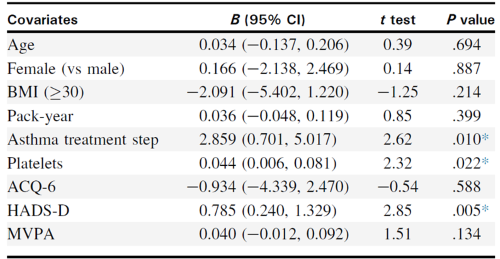
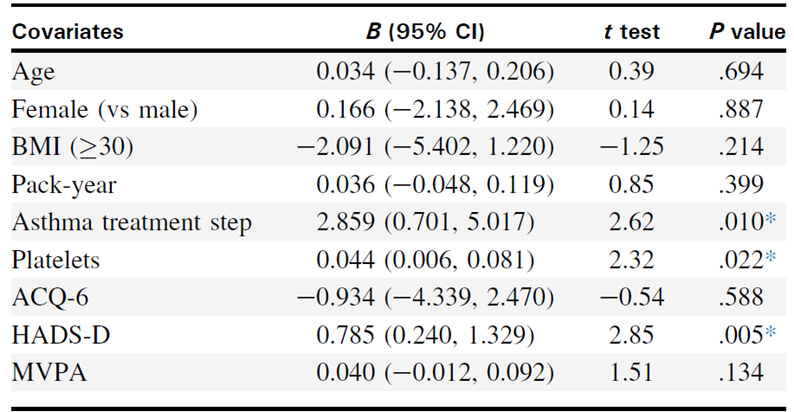
Higher levels of BDNF in the blood were linked to both more severe depressive symptoms (HADS-D score) and more severe asthma (asthma treatment steps) in people with asthma, even after accounting for other factors. (Kawamoto et al. (2025), The Journal of Allergy and Clinical Immunology: In Practice, CC BY 4.0)
The research team also includes Kazuma Kawamoto, Toshihito Otani, Naoko Higaki, and Noboru Hattori from Hiroshima University; Tsunahiko Hirano, Ayumi Fukatsu-Chikumoto, and Kazuto Matsunaga from Yamaguchi University; Yoshihiro Amano and Takeshi Isobe from Shimane University; and Mayuka Yamane and Akihito Yokoyama from Kochi University.
The open access publication costs for this paper were supported by Hiroshima University.
About the study
- Journal: The Journal of Allergy and Clinical Immunology: In Practice
- Title: Brain-Derived Neurotrophic Factor Levels Are Associated With Depressive Symptoms in Patients With Asthma
- Authors: Kazuma Kawamoto, Hiroshi Iwamoto, Tsunahiko Hirano, Yoshihiro Amano, Ayumi Fukatsu-Chikumoto, Mayuka Yamane, Toshihito Otani, Naoko Higaki, Takeshi Isobe, Akihito Yokoyama, Kazuto Matsunaga & Noboru Hattori
- DOI: 10.1016/j.jaip.2025.11.001
Media Contact
Inquiries on the study
Hiroshi Iwamoto
Associate Professor, Graduate School of Biomedical and Health Sciences
E-mail: hir * hiroshima-u.ac.jp
(Note: Please replace * with @)
Inquiries on the story
Hiroshima University Public Relations Office
TEL: 082-424-6131
E-mail: koho * office.hiroshima-u.ac.jp
(Note: Please replace * with @)

 Home
Home